

This stable cell line is the HEK293T cell line stably expressing the OKT3, OKT3 is the monoclonal antibody name for CD3. The stable expression of the single-chain variable fragment (scFv) of OKT3 enables the cell line to mimic the function of antigen-presenting cells. This process involves binding to the T cell receptor (TCR/CD3 complex), thereby transmitting the initial activation signal. This cell line is compatible with exogenous gene transfection and can flexibly express co-stimulatory molecules (e.g., CD80, 4-1BBL) or co-inhibitory molecules (e.g., PD-L1, FLRT3) to construct a T cell dual-signal regulation (activation/inhibition) model. The 293T-OKT3 cell line can activate T cells when co-cultured directly with them.
Performance
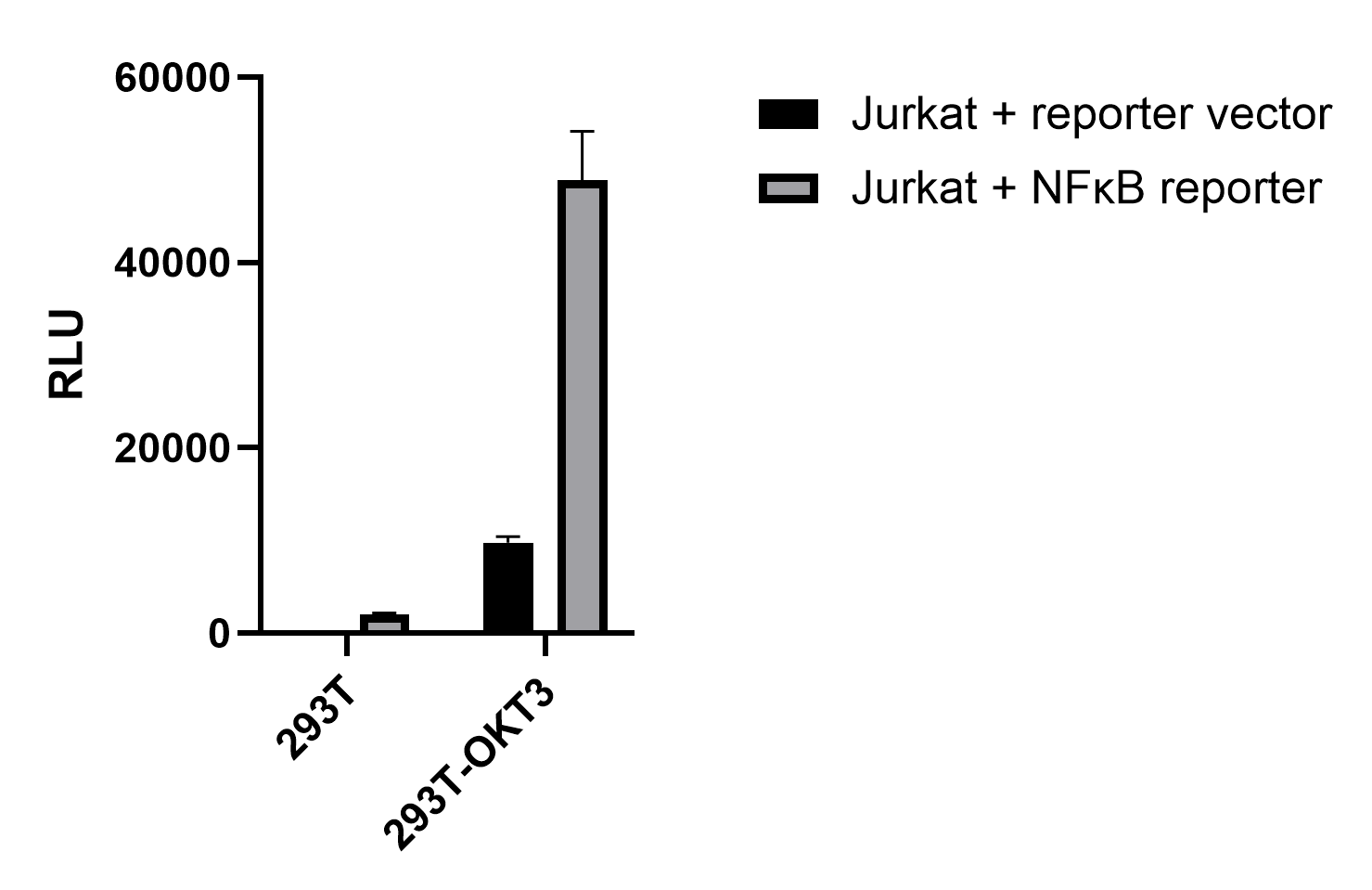 The Jurkat cell line transfected with NFκB reporter gene or non-responsive element reporter gene was stimulated with OKT3-293T or 293T cell Line for 24 hours. Gaussia luciferase activity was then measured using the Secrete-Pair Gaussia Luciferase Assay Kit (#LF061, GeneCopoeia)
Application
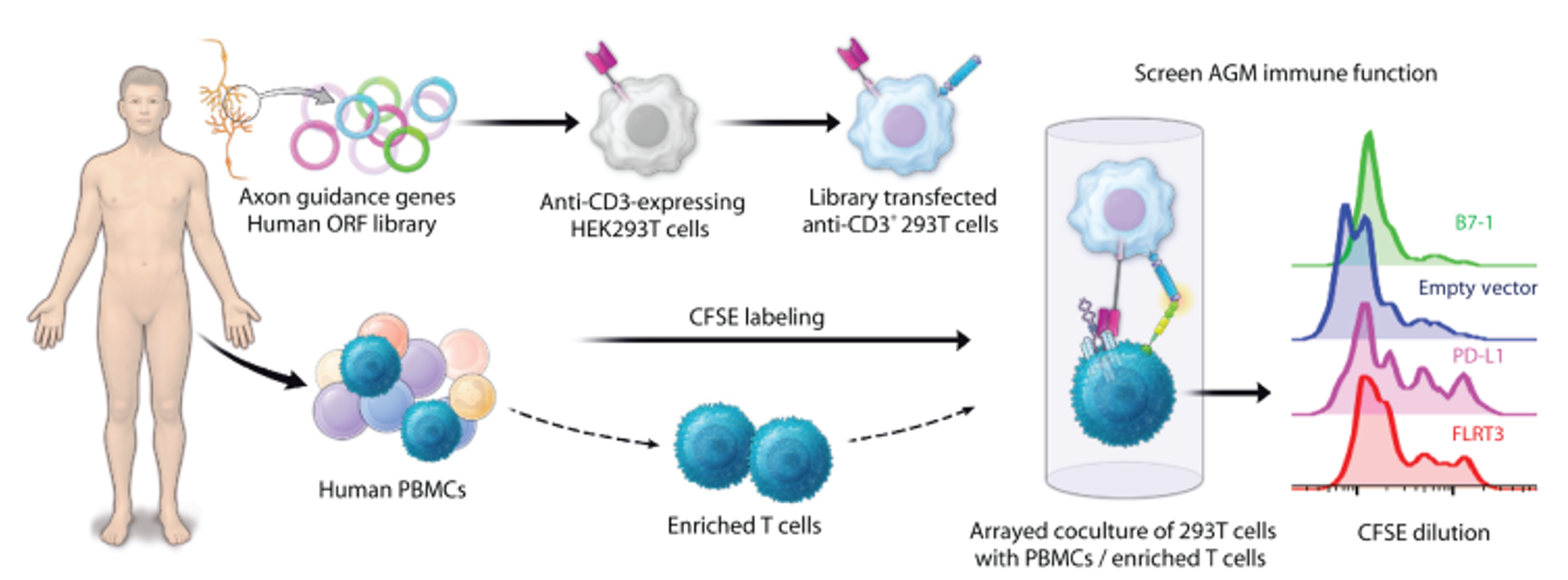 In this study, gain-of-function genetic screens were used to profile axon guidance proteins and their cognate ligands on human T cells. They identified fibronectin leucine-rich transmembrane protein 3 (FLRT3) as a ligand that inhibits T cell activity. (Prajapati et al. Sci Adv. 2024)