GeneCopoeia’s IndelCheck™ CRISPR insertion or deletion (indel) detection system provides a powerful means for assisting you in your genome editing applications. The IndelCheck™ system can be used for:
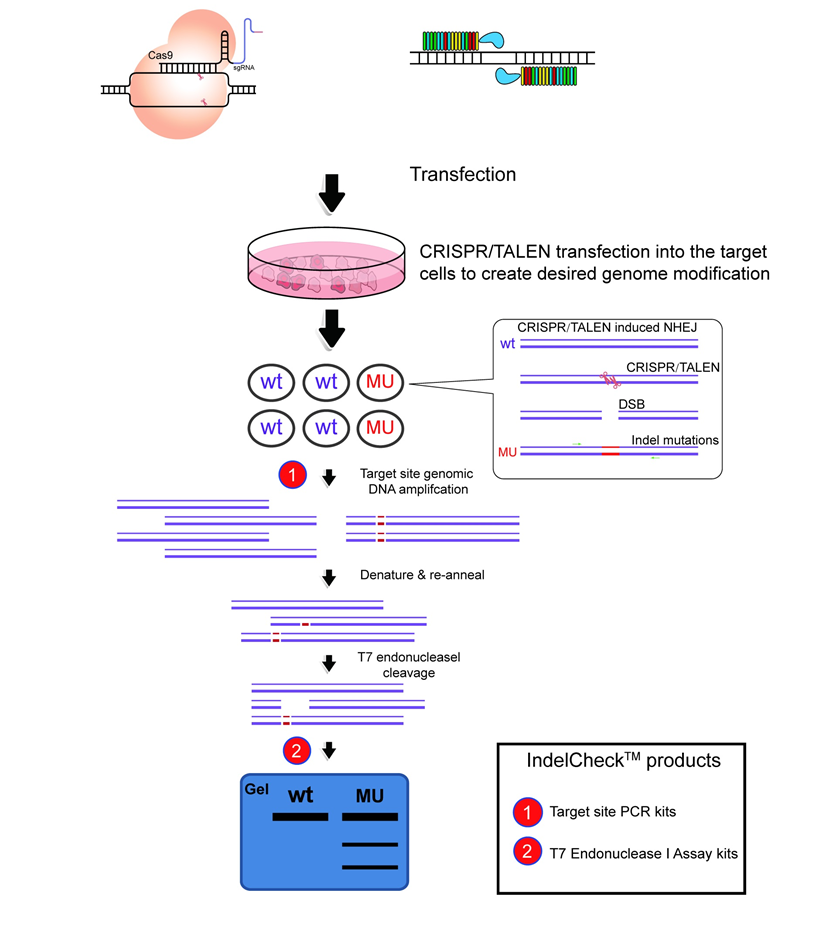
CRISPR sgRNA functional validation (Figure 1) before undertaking long genome editing projects (3-6 months for genome edited cell lines, or 6-9 months for genome-edited mouse lines), saving you a great deal of time and effort by eliminating CRISPR sgRNAs with poor cleavage efficiency.
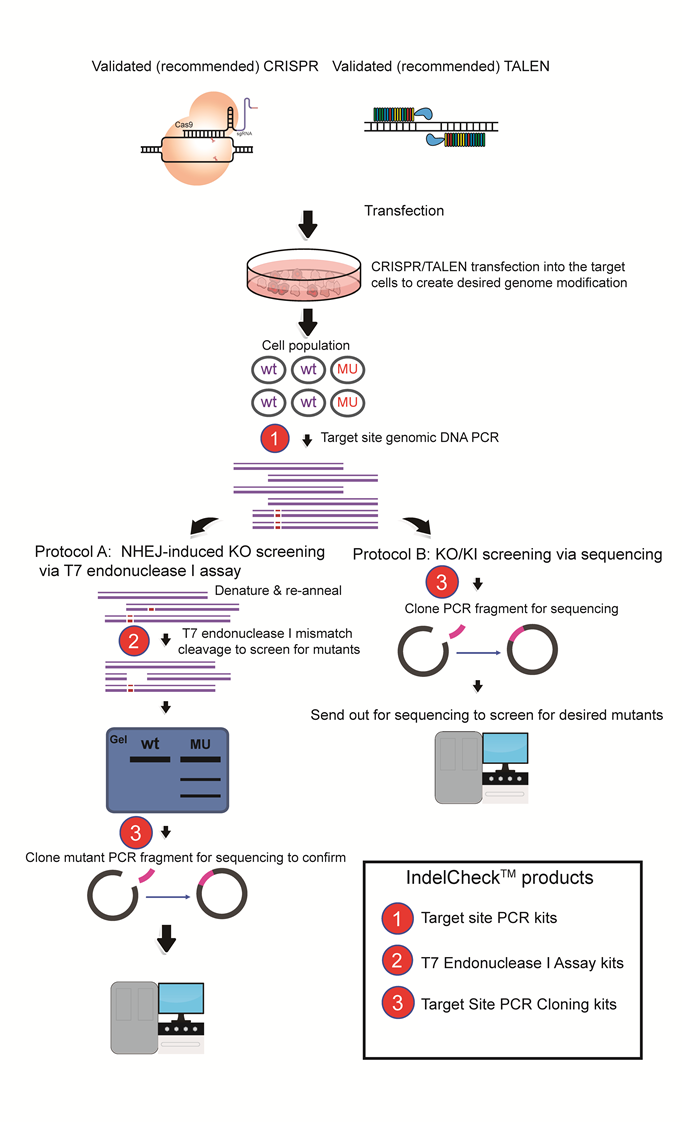
Screening cell clones for knockout (KO) and knock-in (KI) modifications (Figure 2).
Advantages
Complete system to simplify your CRISPR validation and edited clone screening
Robust amplification for the target site PCR. No genomic DNA isolation is required
Easy to use T7 endonuclease I assay with optimized conditions and positive control
Order Information
The IndelCheck™ system consists of the following major components:
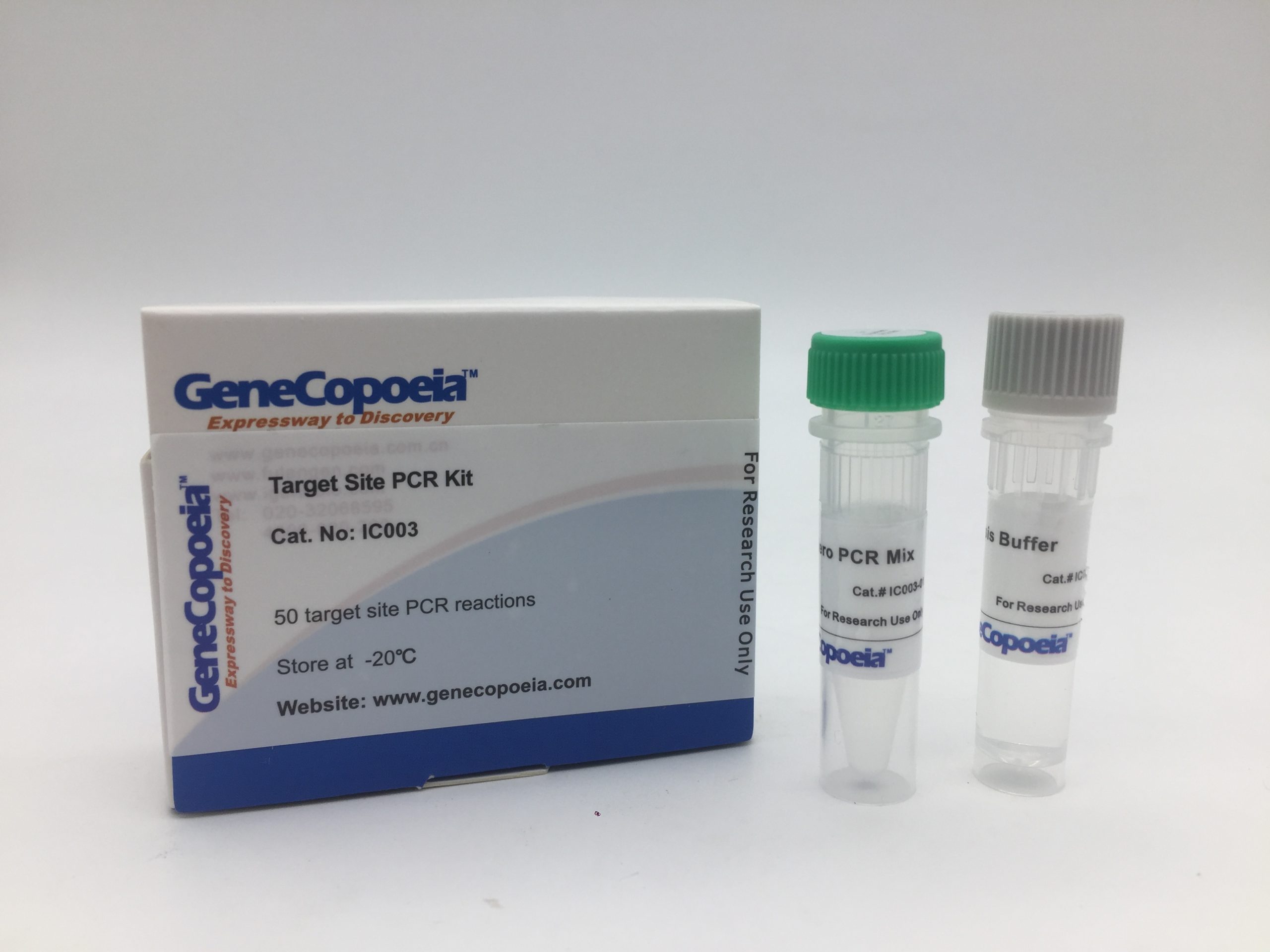
Target site PCR kit V2.0. For amplification of targeted genomic regions from cell lysates without genomic DNA isolation. Now in Version 2.0, the Target Site PCR kit contains buffer, SuperHeRo™ DNA polymerase, and nucleotides together in one mix for greater convenience compared with Version 1.0
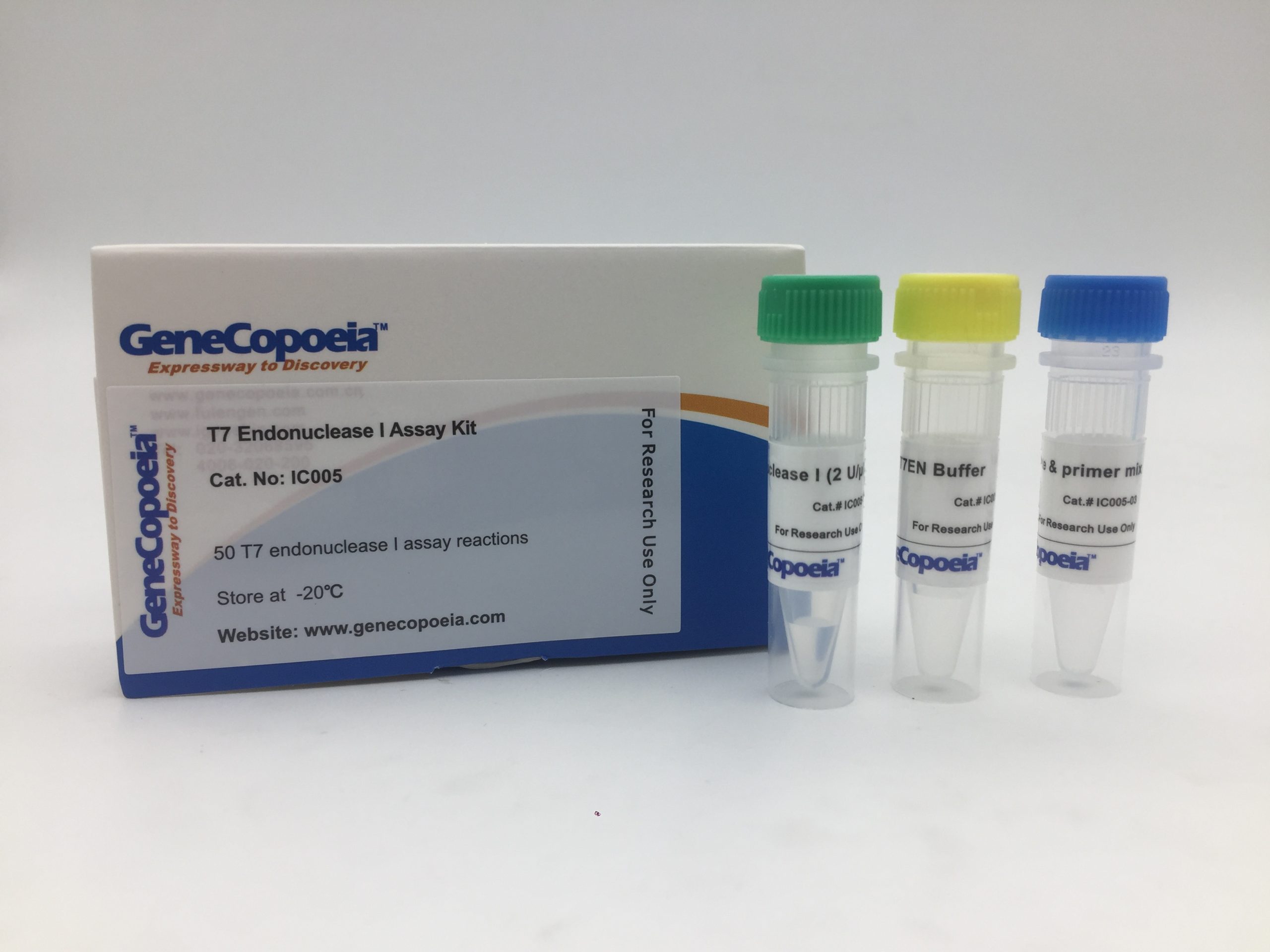
T7 endonuclease I assay kit. For the detection of CRISPR-introduced indel mutations near target site(s).
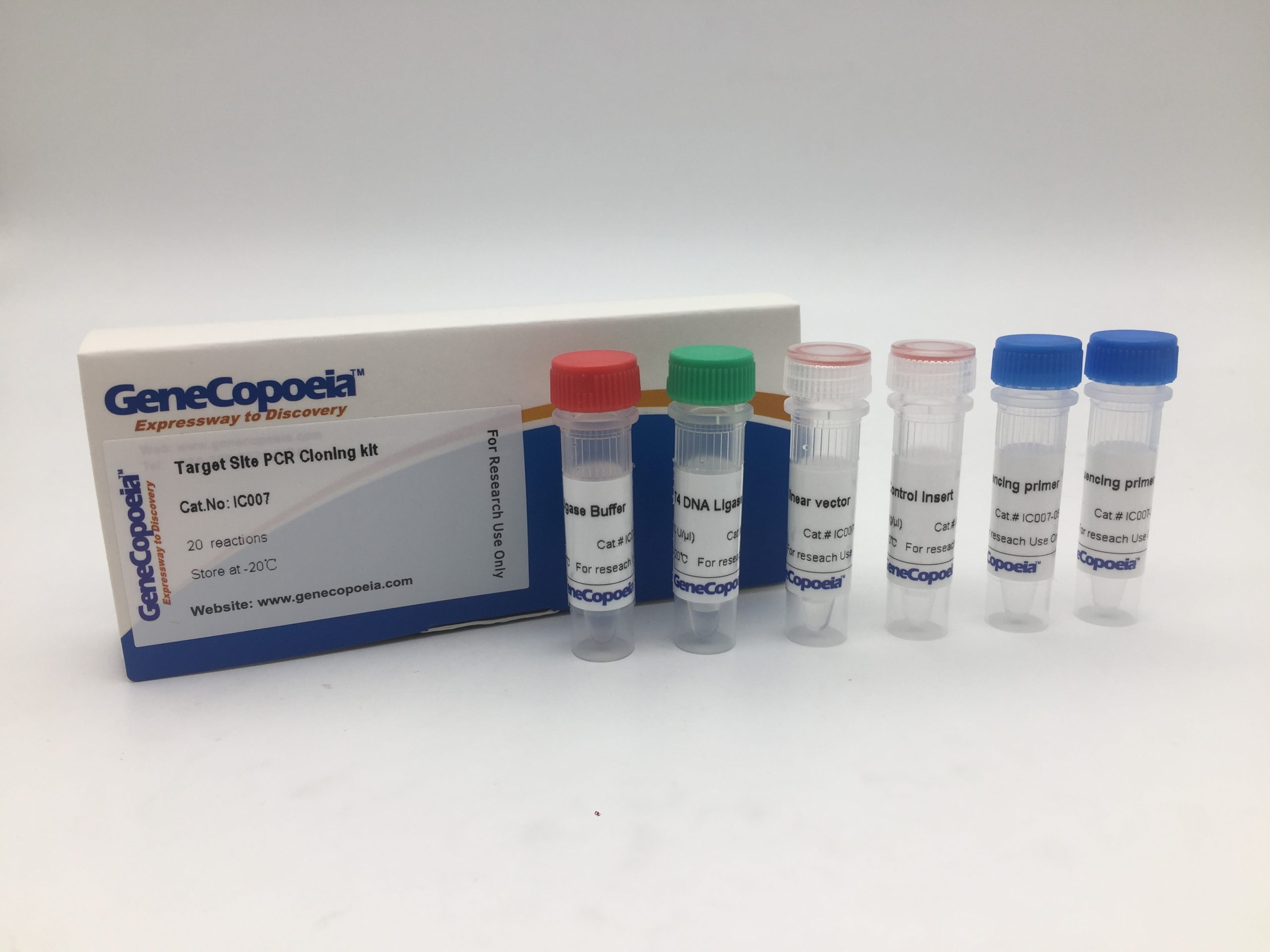
Smart-Join™ Blunt-end PCR Cloning Kit. For cloning of PCR products to be used for sequencing and identification of CRISPR-mediated genomic modifications.
Related Products
Validation service
GeneCopoeia also offers CRISPR validation services using the IndelCheck™ CRISPR insertion and deletion detection system. We can validate the CRISPR you purchased from us using HEK293 cells (human), NIH3T3 cells (mouse), or your specific cell line(s). Please contact us at inquiry@genecopoeia.com or 301-762-0888.
Figure 1. CRISPR functional validation using the IndelCheck™ system. Cells transfected with CRISPR plasmids are harvested in bulk, followed by generation of a PCR product using primers flanking the target site with the Target site PCR kits (1). The PCR product is denatured, followed by re-annealing, leading to a population of double strand fragments, some of which contain mismatches. These mismatches are detected by the T7 endonuclease I Assay kit (2). If CRISPR are active in the cell, then cleavage products will be visible on an agarose gel.
Application 2: Screening for CRISPR-mediated genomic modifications
Figure 2. Using the IndelCheck™ system to screen for cell clones carrying desired CRISPR-mediated genomic modifications. Cells transfected with CRISPR plasmids are plated for single clones, followed by genration of a PCR product using primers flanking the target site with the Target site PCR kits (1). In Protocol A (left) for identifying NHEJ-mediated knockouts, PCR products are screened for indels using the T7 Endonuclease I Assay kits (2). Positive PCR products are then cloned into a plasmid vector using the Smart-Join™ Blunt-end PCR Cloning Kit (3) and sequenced to confirm the presence of the mutation(s). In Protocol B, for identifying any knockout or knockin modification, PCR products are cloned directly into a plasmid vector using the Target Site PCR Cloning kit (3) and sequenced to detect the presence of the mutation(s).
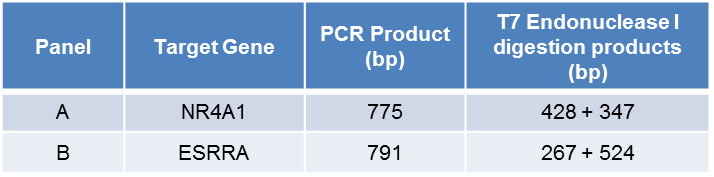
Figures showing typical validation results using the combination of IndelCheck™ Target Site PCR kit, T7 Endonuclease I Assay Kit, and Target Site PCR Cloning Kit:
A
B
M
–
+
M
–
+
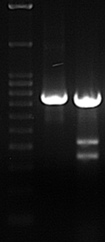
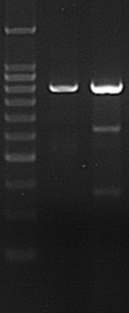
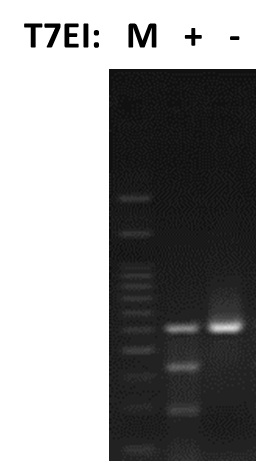
Figure 3. T7 Endonuclease I digestion of genomic amplicons modified by Cas9-sgRNA. Control cells (-) should only have a single band corresponding to uncut amplicon. Amplicons from sample cells (+) transfected with active Cas9-sgRNA yield 3 bands: 1 unmodified + 2 cleavage products of predicted sizes.
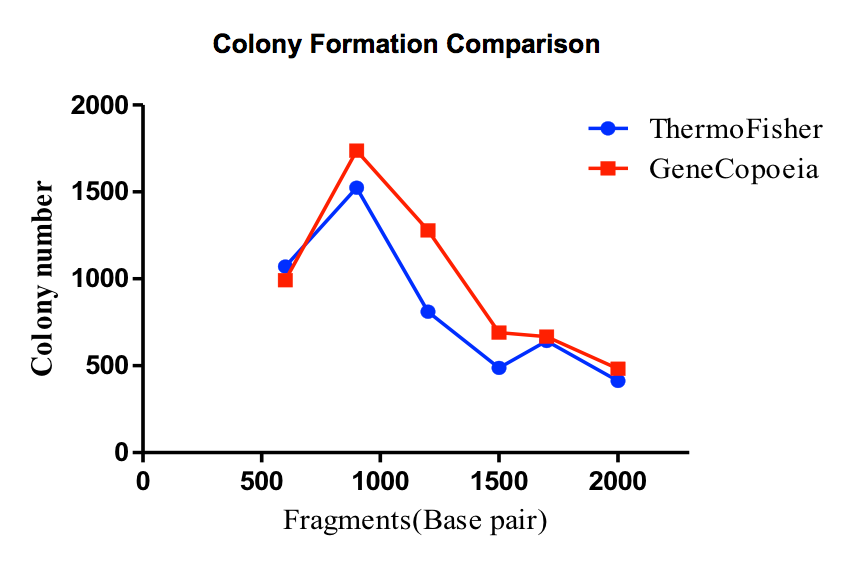
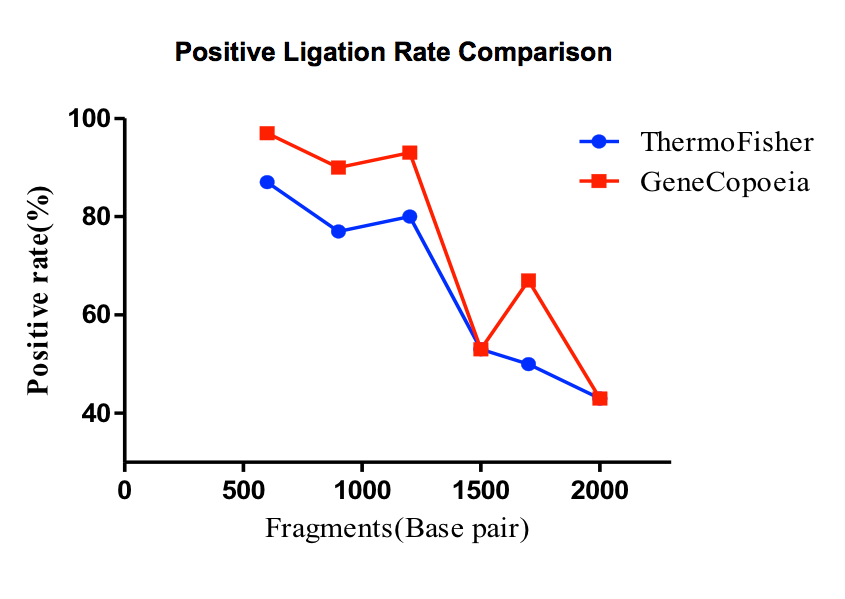
Figure 4. Smart-Join™ Blunt-end PCR Cloning Kit Performance Comparison. A variety of PCR products of different lengths were subjected to ligation reactions and transformed onto agar plates, the total number of colonies and the positive ligation rate were detected. It is shown that the ligation efficiency of Smart-Join™ Blunt-end PCR Cloning Kit (GeneCopoeia, Cat. No. IC007) is comparable to that of Zero Blunt™ PCR Cloning Kit (Thermo Fisher, Cat. No. K275020).
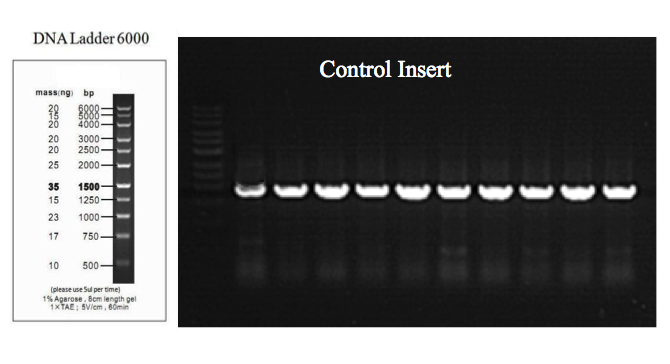
Figure 5. Agarose gel electrophoresis of ligation products from multiple sets of Control Insert using the Smart-Join™ Blunt-end PCR Cloning Kit (GeneCopoeia, Cat. No. IC007).
GeneCopoeia’s stable cell lines constitutively expressing the CRISPR Cas9 nuclease enable you to carry out CRISPR genome editing applications with high efficiency.
The GeneHero™ Cas9 stable cell lines are available pre-made in many human, mouse, and rat cell line backgrounds. The S. pyogenes CRISPR Cas9 nuclease is stably integrated into either the human AAVS1 or mouse ROSA26 “Safe Harbor” sites, or randomly via lentiviral-mediated transduction.
The CRISPR Cas9 nuclease, in combination with single guide RNAs (sgRNAs), is widely used to create targeted genomic modifications, from gene knockouts, mutagenesis, fusion tagging, and more, in eukaryotic cells and animal models. Stable Cas9 integration ensures robust and consistent expression of the CRISPR Cas9 nuclease.
Advantages
Stable Cas9 integration minimizes the need for co-transfection or co-transduction of sgRNAs, ideal for high-throughput sgRNA applications.
Single clone isolation provides consistent, high-level Cas9 expression in a uniform genetic background.
Don’t see the Cas9 stable cell line you want? We also offer custom cell line service. Please contact us at inquiry@genecopoeia.com, or call 301-762-0888 for a quote.
*Promotions are valid in the US & Canada only. For international customers, please contact your local distributors. Discounts are not valid on previous purchases and cannot be combined with additional discounts.
Choose your human, mouse, or rat Cas9-expressing stable cell line from the list below. You can also find Safe Harbor Cas9 knock-in kits, for do-it-yourself engineering of the Cas9-expressing stable cell line of your choice. In addition, you can purchase one of our IndelCheck™ insertion/deletion detection kits, for efficient validation of CRISPR sgRNAs and TALENs, and for screening for CRISPR- or TALEN-modified cell lines
Disclaimer: Pricing for premade cell lines are for customers in the US and Canada only. International customers, please contact your local distributor for pricing.
To obtain the datasheet for each cell line, please click on the designated catalog number.
Control Lentivirus expressing sgRNA
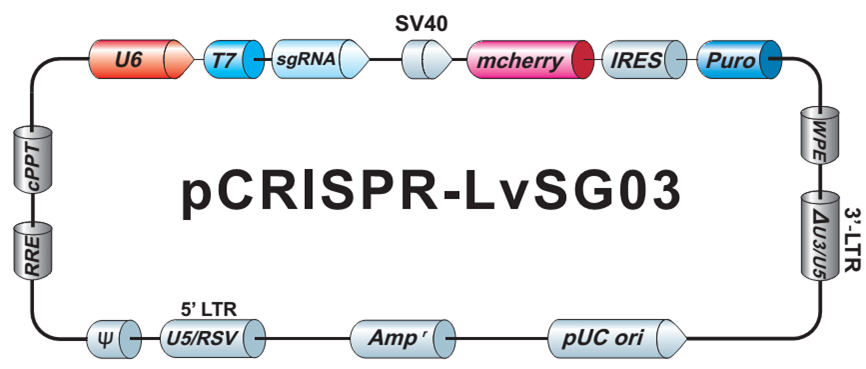
Lentiviruses carrying functional validated sgRNA targeting either GFP, HUWE or EMX1 are available as positive controls for the premade stable Cas9 cell lines. Simply transduce the control sgRNA-lentivirus to the Cas9 cell line, the infected cells can be selected by mCherry fluorescence and puromycin resistance, and editing of the target genes can be verified with either T7 Endonulease I assay or DNA sequencing.
Figure Left: Demonstration of stable Cas9 activity in a cell line. Human H1299 cells stably expressing Cas9 nuclease from the AAVS1 Safe Harbor site were transduced with HUWE sgRNA-lentivirus (Cat # LPP-HUWE-LvSG03-A00). PCR products flanking the sgRNA target site were generated, denatured, reannealed, and treated with (+) or without (-) T7 Endonuclease I, which cleaves mismatched DNA. The presence of two bands below the uncut band at the correct sizes indicates that Cas9 is active in these cells. Right: Lentiviral plasmid carrying target sgRNA (either GFP, HUWE or EMX1) used for lentivirus packaging.
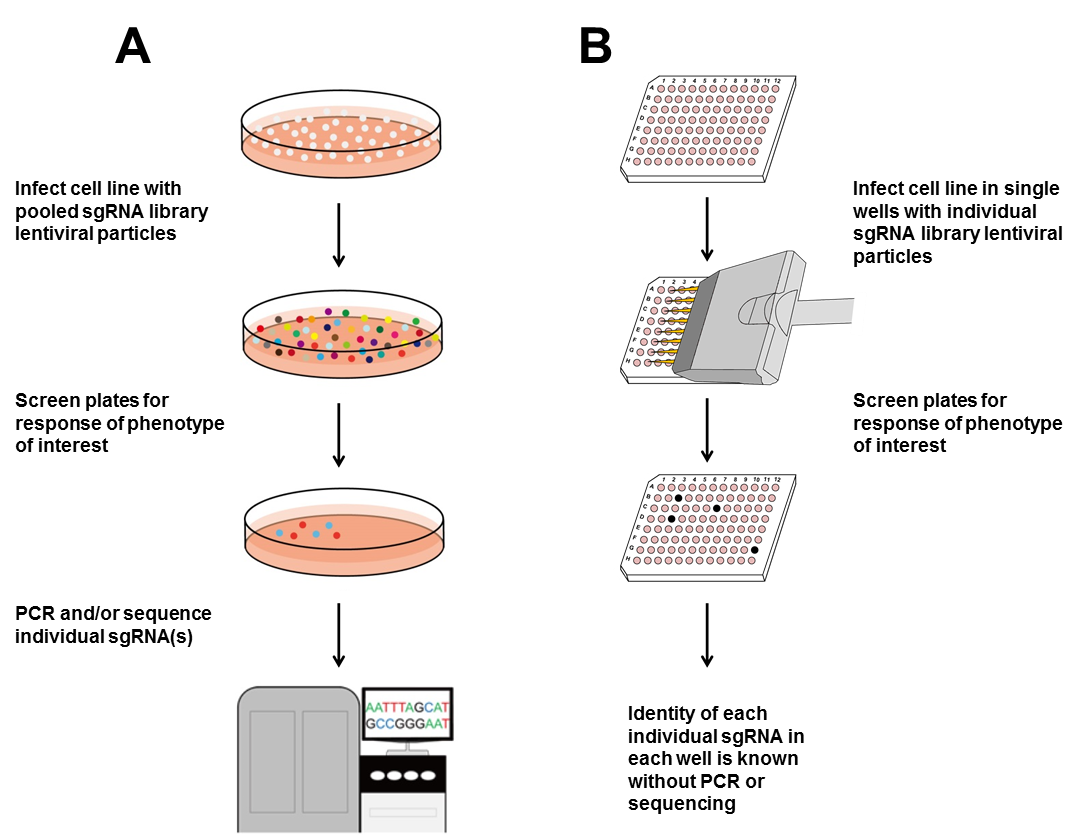
High-throughput knockout screening with many sgRNAs, either individually or in pools. Ideal for drug target discovery (Figure 3).
Convenient validation of several drug target candidates.
Validation of sgRNA cleavage activity in a fast-growing, easy-to-transfect or transduce model cell line, either prior to transfection/transduction of your cell line, or to troubleshoot sgRNAs with little or no cleavage activity.
Figure 3. Example application of Cas9-expressing stable cell lines Use of the GeneHero™ Cas9 stable cell lines with CRISPR sgRNA libraries for drug target discovery. A. Pooled screen. Cas9-expressing cells infected with each sgRNA library pool are screened for the desired readout. Pooled cells are subjected to Sanger sequencing for individual sgRNAs, or deep sequencing to look for over- or under-representation of individual sgRNAs. B. Knockout screen using arrayed sgRNAs. Cas9-expressing cells are infected with individual sgRNA lentiviruses. Wells are screened for the readout of interest. Individual sgRNAs corresponding to the phenotype of interest are already known without sequencing.
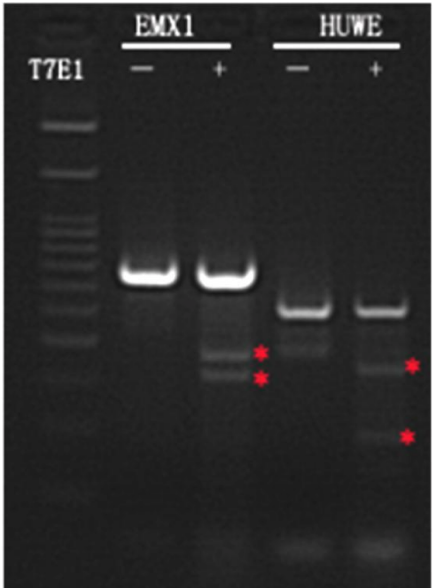
Figure 4. sgRNA targeting to EMX1 or HUWE gene were transduced into Cas9 cell line by lentiviral particles. EMX1 or HUWE gene was cut by Cas9 expressed inside the cells and repaired through NHEJ with mutation. The mutations were recognized and cut by T7 Endonuclease I, resulting in shorter DNA fragments (marked with red asterisks).


 Powered by Bioz