
Lentifect™ Exosome Labeling Lentiviral Particles
Exosomes are secreted nanovesicles with diameters ranging from 30 to 150 nm and produced in the endosomal compartment of most eukaryotic cells. They are present in all body fluids under both normal and pathophysiological conditions. They have important roles in mediating intercellular communication by serving as carriers of different biomolecules, including proteins, RNAs, and lipids from one cell to another. Exosomes share common features such as certain tetraspanins (CD9, CD63, and CD81), heat shock proteins, biogenesis related proteins, membrane transport and fusion proteins, nucleic acids (mRNA, miRNA, and long non-coding RNAs and DNAs), and lipids.
These unique properties of exosomes provide opportunities for innovations in diagnosis and treatments. The pathway of intercellular vesicle traffic plays an important role in many aspects of human health and disease, including development, immunity, tissue homeostasis, cancer, and neurodegenerative diseases. Therefore, there is a growing interest in clinical applications of exosomes as biomarkers and for therapeutic use.
Applications
- Exosome quantitation
- Exosome biodistribution studies
- Exosome animal study tracking
- Cell uptake studies
- Cell targeting studies
- Drug library screening
Product Details
GeneCopoeia offers lentiviral particles that efficiently express exosome biomarkers CD9, CD63 and CD81 with different reporter genes (tdTomato, mCherry-Flag, Flag-Gluc). These constructs can help you track the exosome packaging, secretion, targeting and trafficking mechanisms.
The ultra-purification of exosome lentiviral particles and exosome cell lines services are also available. Please contact us at inquiry@genecopoeia.com.
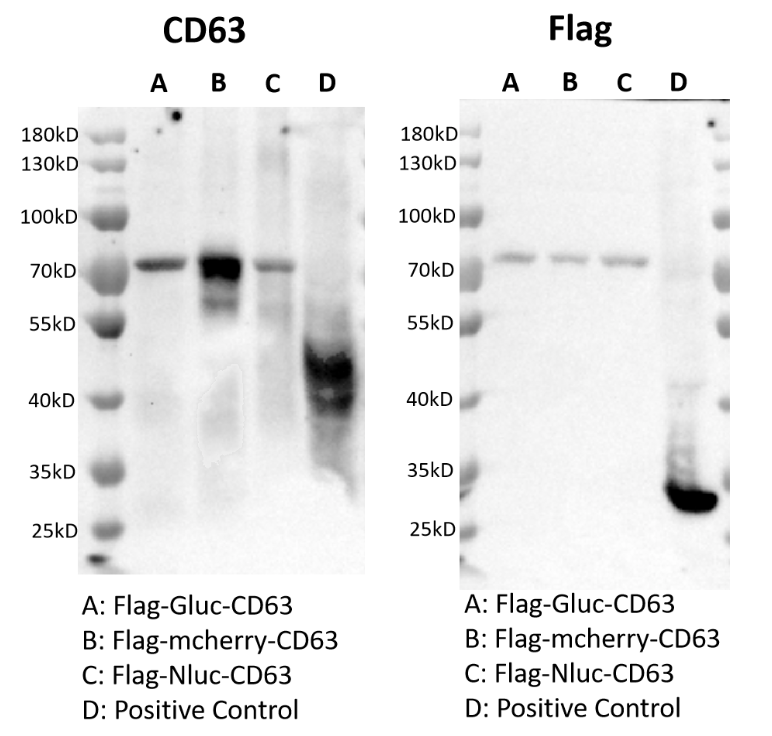
Figure 1: CD63 exosome biomarker western blot. Expressed A, B, C, D vectors in HEK293T cell line. The positive control is Flag-EGFP. Exosomes were isolated from the cell culture supernatant. The picture on the left is detected by 1:1000 anti-CD63 antibody and 1:5000 anti-mouse IgG antibody. The picture on the right is detected by 1:1000 anti-Flag antibody and 1: 5000 anti-mouse IgG antibody. The expected size of the protein: Flag: 24 kDa, Gluc: 18 kDa, Nluc: 19 kDa, mCherry: 26 kDa, CD63: 53 kDa, Flag-Gluc-CD63: 73 kDa, Flag-mCherry-CD63: 81 kDa.
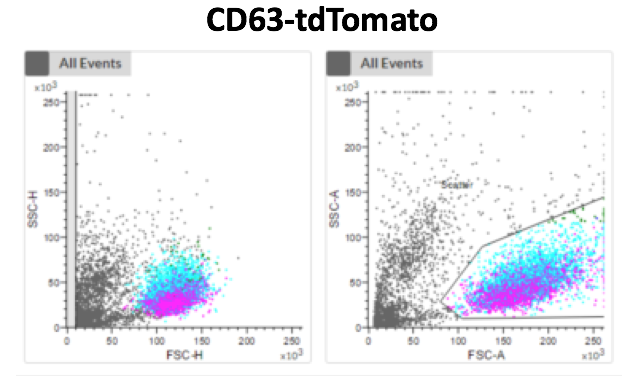
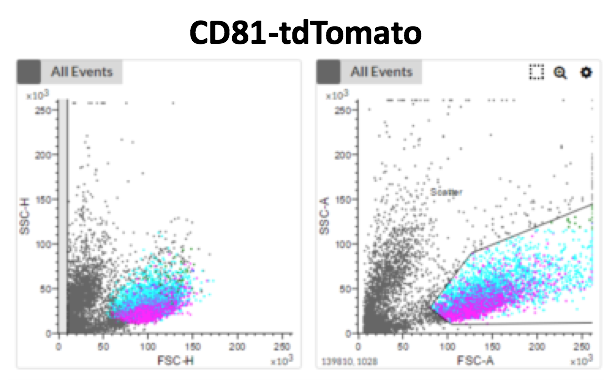
Figure 2: FACS analysis for labeled exosome cell feeding experiments. CD63-tdTomato and CD81-tdTomato fusion proteins were expressed in the HEK293T cell line. Exosomes were isolated from the cell culture supernatant and used for cell feeding experiments. The new plates of the HEK293T cells were incubated with isolated-exosomes for 6 hours and then were FACS-sorted for analysis.
miRNA Clones
A microRNA (miRNA) is a small non-coding RNA molecule (containing about 22 nucleotides) found in plants, animals and some viruses. miRNAs have functions in RNA silencing and post-transcriptional regulation of gene expression. Many miRNAs are evolutionarily conserved, which implies that their important biological functions. For your miRNA research, GeneCopoeia provides the complete solutions of miRNA-related clones.miTarget™ 3′ UTR miRNA Target Clones
GeneCopoeia offers genome-wide human, mouse and rat microRNA (miRNA) 3′ UTR target clones in mammalian expression vectors. miRNA 3′ UTR target clones can be used for miRNA target identification and functional validation of predicted targets, or to study the regulatory effect of miRNAs on target genes.miExpress™ Precursor miRNA Expression Clones
Hairpin precursor miRNA of approximately 150 nucleotides is cloned into lentiviral or non-viral vectors for delivery in virtually all cell types.miArrest™ miRNA Inhibitors
miRNA inhibitor clones bind specifically to their target miRNAs allowing transient as well as stable suppression of the target gene. The choice of H1 or U6 promoter allows constitutive expression of inhibitors in virtually all types of mammalian cells.miRNA related products
miProfile™ Exosome miRNA qPCR arrays
For focused group profiling of exosome-related miRNA expression
miProfile™ exosome miRNA qPCR arrays profile the expression of exosome-related miRNAs, which are carefully chosen for their close exosome correlation based on a thorough literature search of peer-reviewed publications. Arrays are available for expression profiling of specific types of exosome-related miRNAs or overall exosome-related miRNAs.
Exosomes have important roles in the spread of protein, mRNA, miRNA and DNA and they are the contributing factors in the development of several diseases. Exosomes essentially deliver many of their functions as an intercellular shuttle with a cargo of proteins and RNAs for target cell regulation. The miProfile™ exosome arrays allow researchers to profile the differential expression of miRNAs in exosomes from different samples (urine, blood, or milk) and various cancers to gain understanding of the role of miRNA in the intercommunication occurring between different cells. Exosomal miRNAs in the tumor microenvironment may impact tumor proliferation, vascularization, metastasis and other biological characteristics. Exosomal miRNAs are likely to be applied as promising non-invasive biomarkers and potential targetable factors in cancer diagnosis and treatment.
To view other miProfile™ miRNA qPCR arrays, click below:
Advantages
- Close exosome correlation – miRNAs are carefully chosen for their close exosome correlation based on a thorough literature search of peer-reviewed publications
- Sensitive – Detect miRNA from as little as 10 pg of small RNA or 20 pg of total RNA
- Specific – Be able to distinguish miRNAs with single nucleotide mismatches. Each primer set has been experimentally validated for specific amplification
- Broad linearity– Allow miRNAs at variable expression levels to be detected simultaneously
- Reproducible – High reproducibility (R2>0.99) for inter-array and intra-array replicates
- Validated miRNA primers – Each miRNA primer is designed using a proprietary algorithm and experimentally validated
*Promotions are valid in the US & Canada only. For international customers, please contact your local distributors. Discounts are not valid on previous purchases and cannot be combined with additional discounts.
To Order
To Order
Select RT-PCR reagents
 Powered by Bioz
GeneHero™ CRISPR Products and Services
GeneCopoeia’s GeneHero™ CRISPR-Cas9 products and services provide a complete, powerful solution to your genome editing needs. Products and services include:
- CRISPR Plasmids
Transfect cells with our CRISPR plasmids with Cas9 and sgRNA for human, mouse, and rat. Search our database of more than 45,000 human, mouse, and rat genes for genome editing using CRISPR.
Recombinant Streptococcus pyogenes Cas9 nuclease, purified from E. coli, is a great choice for genome editing applications in vitro or in vivo.
- CRISPR Lentivirus
Genome integration of CRISPR elements using lentivirus. Cas9 and/or sgRNA packed in purified lentiviral particles at 108TU/ml, ready to infect all cell types.
- CRISPR AAV
Episomal expression of CRISPR components with adeno-associated viral particles carrying Cas9 and/or sgRNA, excellent for tissue and animal transduction.
Premade Cas9-expressing stable cell lines are great for sgRNA library screening and other high-throughput CRISPR-Cas9 applications.
Advantages
- RNA-guided genomic DNA recognition regardless of the methylation status
- Similar or greater gene-editing efficiency compared to ZFNs and TALENs
- Capable of editing multiple genes simultaneously (multiplexing)
- Simple and fast design process. No need to reengineer the nuclease for each new target
Product Information
CRISPR Plasmids
sgRNA expression plasmids are available for targeting virtually any gene in any experimental system. sgRNA plasmids express either sgRNA only or sgRNA + Cas9 nuclease in an all-in-one format. Lentiviral clones express sgRNA alone. Cas9-expressing lentiviral clones are available separately.
The CRISPR plasmid options listed below are intended for using 20 ntsgRNAs with the wild-type Cas9 nuclease from Streptococcus pyogenes(SpCas9). GeneCopoeia also provides alternate CRISPR options, such as Cas9 D10A nickase and other high-fidelity versions of Cas9, SaCas9, and shorter sgRNAs. To purchase reagents for these other options, please contact us for a custom quote.
Custom sgRNA Expression Plasmids
| Vector | Promoter | sgRNA and Cas9 | Selection Marker/ Reporter Gene | Vector Type | Vector Map |
|---|---|---|---|---|---|
| All-in-one (Cas9 nuclease + sgRNA) clones | |||||
| pCRISPR-CG02 | U6 | sgRNA and CBh-driven Cas9 (wild type) in the same vector | – / – | Non-viral | 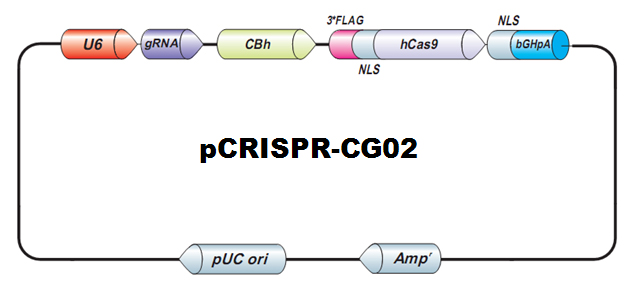 |
| pCRISPR-CG04 | U6 | sgRNA and CMV-driven Cas9 (wild type) in the same vector | Neomycin / copGFP | Non-viral | 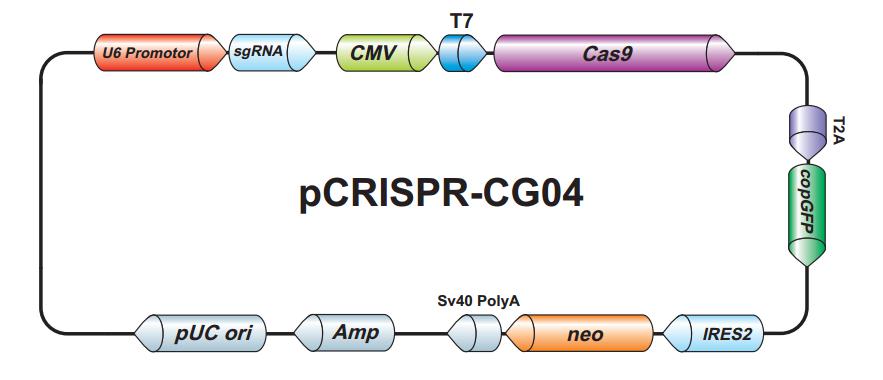 |
| pCRISPR-CG07 | U6 | sgRNA and CBh-driven Cas9 (wild type) in the same vector | – / copGFP | Non-viral | 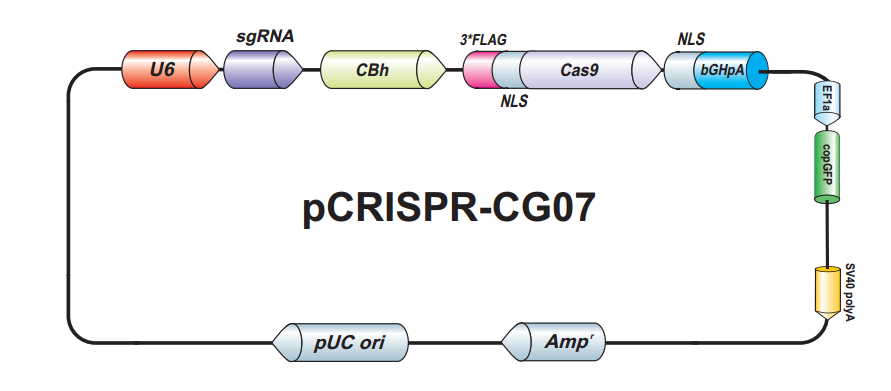 |
| pCRISPR-CG08 | U6 | sgRNA and CBh-driven Cas9 (wild type) in the same vector | – / mCherry | Non-viral | 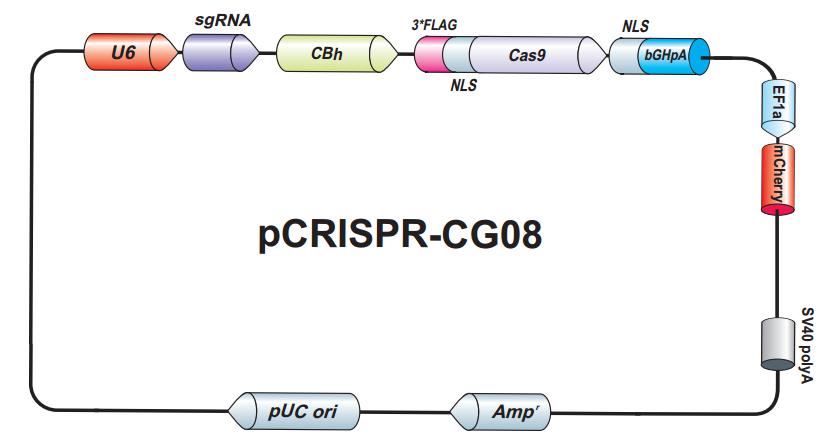 |
| pCRISPR-CG12 | U6 | sgRNA and CMV-driven Cas9 (wild type) in the same vector | Neomycin / mCherry | Non-viral | 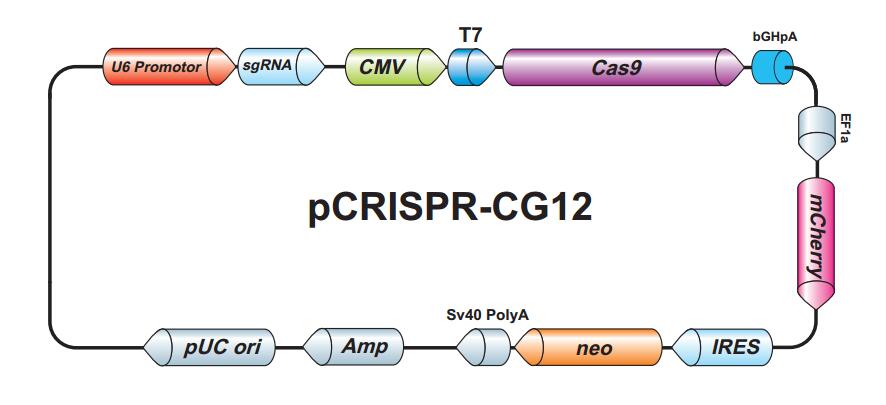 |
| pCRISPR-AD01 | U6 | sgRNA and CMV-driven SaCas9 in the same vector | – / | AAV |  |
| pCRISPR-AD02 | U6 | sgRNA and hSyn-driven SaCas9 in the same vector | – / – | AAV | |
| pCRISPR-LvSG06 | U6 | sgRNA and EF1a-driven Cas9 (wild type) in the same vector | Puromycin / – | Lentiviral | 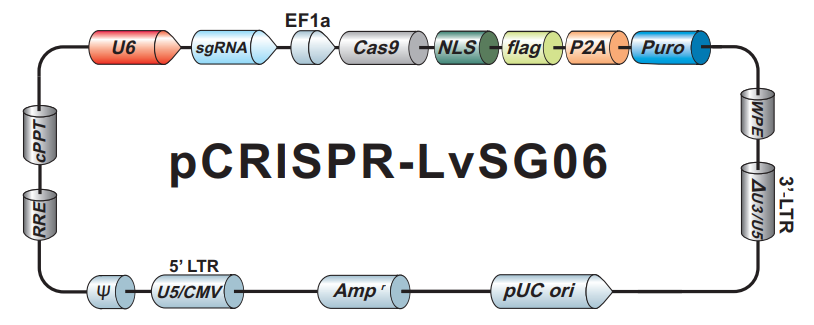 |
| pCRISPR-LvSG09 | U6 | sgRNA and EF1a-driven Cas9 (wild type) in the same vector | Puromycin / eGFP | Lentiviral | 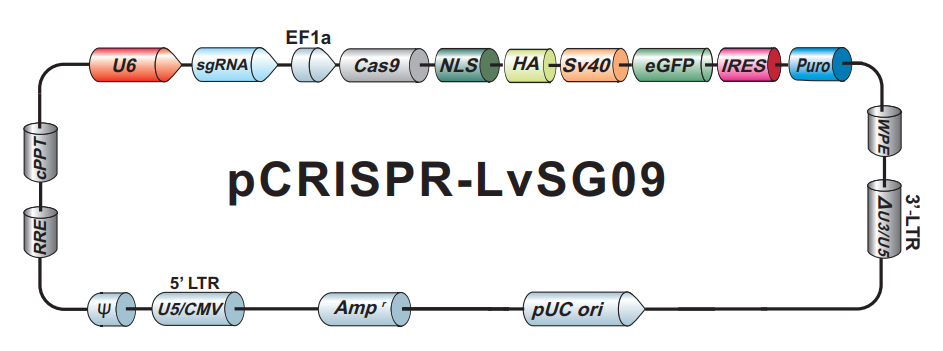 |
| pCRISPR-LvSG10 | U6 | sgRNA and EF1a-driven Cas9 (wild type) in the same vector | Hygromycin / – | Lentiviral | 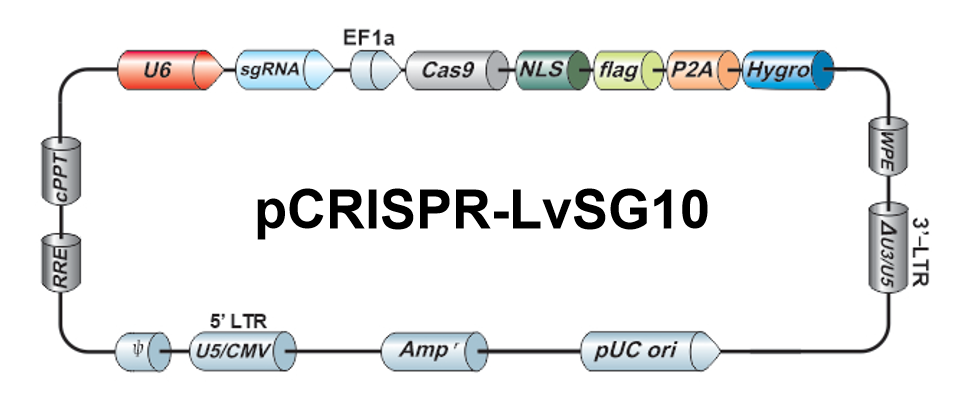 |
| sgRNA only clones | |||||
| pCRISPR-SG01 | U6 | sgRNA only | Hygromycin / – | Non-viral | 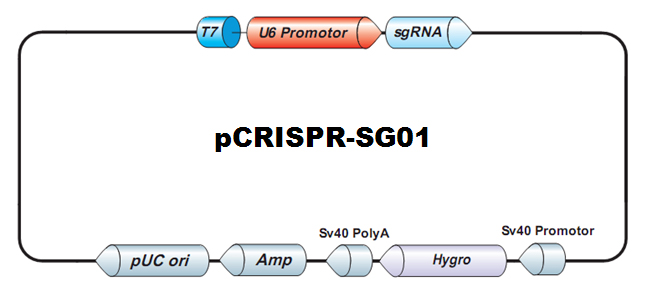 |
| pCRISPR-AV20 | U6 | sgRNA only | – / – | AAV | |
| pCRISPR-AV22 | U6 | sgRNA only | – / eGFP | AAV | |
| pCRISPR-LvSG03 | U6 | sgRNA only | Puromycin / mCherry | Lentiviral | 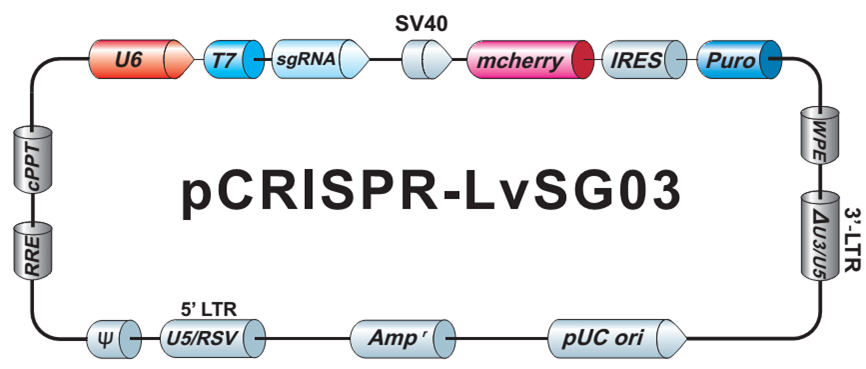 |
Click here to search our database of sgRNA plasmids for knocking out more than 45,000 human, mouse, and rat genes.
Synthetic sgRNAs
GeneCopoeia offers customers a design and chemical synthesis service for sgRNAs (single-guide RNAs) targeting genes of interest. Chemically synthesised sgRNAs (including crRNA and tracrRNA) are purified via HPLC and modified by 2′-O-methyl and thiophosphate at the 3′ and 5′ ends. When Cas9 nuclease is present, the sgRNA recognises the target DNA sequence and guides Cas9 to cleave the target site. This creates double-strand breaks (DSBs) in the DNA and enables genome editing, including gene knockout, knock-in and mutation.Performance
| (A) | 
|
| (B) | 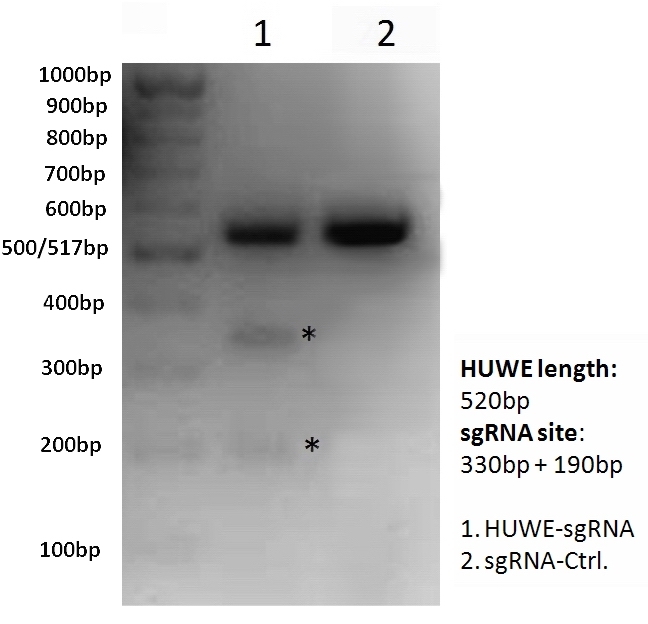 |
Fig.1 HUWE1-sgRNA/Cas9 targets the HUWE1 gene in HEK293T cells
(A) Design of HUWE1-sgRNA and genomic PCR primers; (B) Transfection of HEK293T cells in a 6-well plate using HUWE1-sgRNA/Cas9 clones and sgRNA/Cas9 control clones (lane 2). Cells were harvested 40 hours after transfection, genomic DNA was extracted, and PCR amplification was performed using HUWE1-specific PCR primers. The PCR products were gel-purified, mixed with buffer, denatured, annealed, and then digested with T7 ENI for 60 minutes in a 37℃ water bath. The fragment length of the HUWE1 PCR product should be 520 bp, and the products after T7 ENI digestion should be 330 bp and 190 bp, respectively.
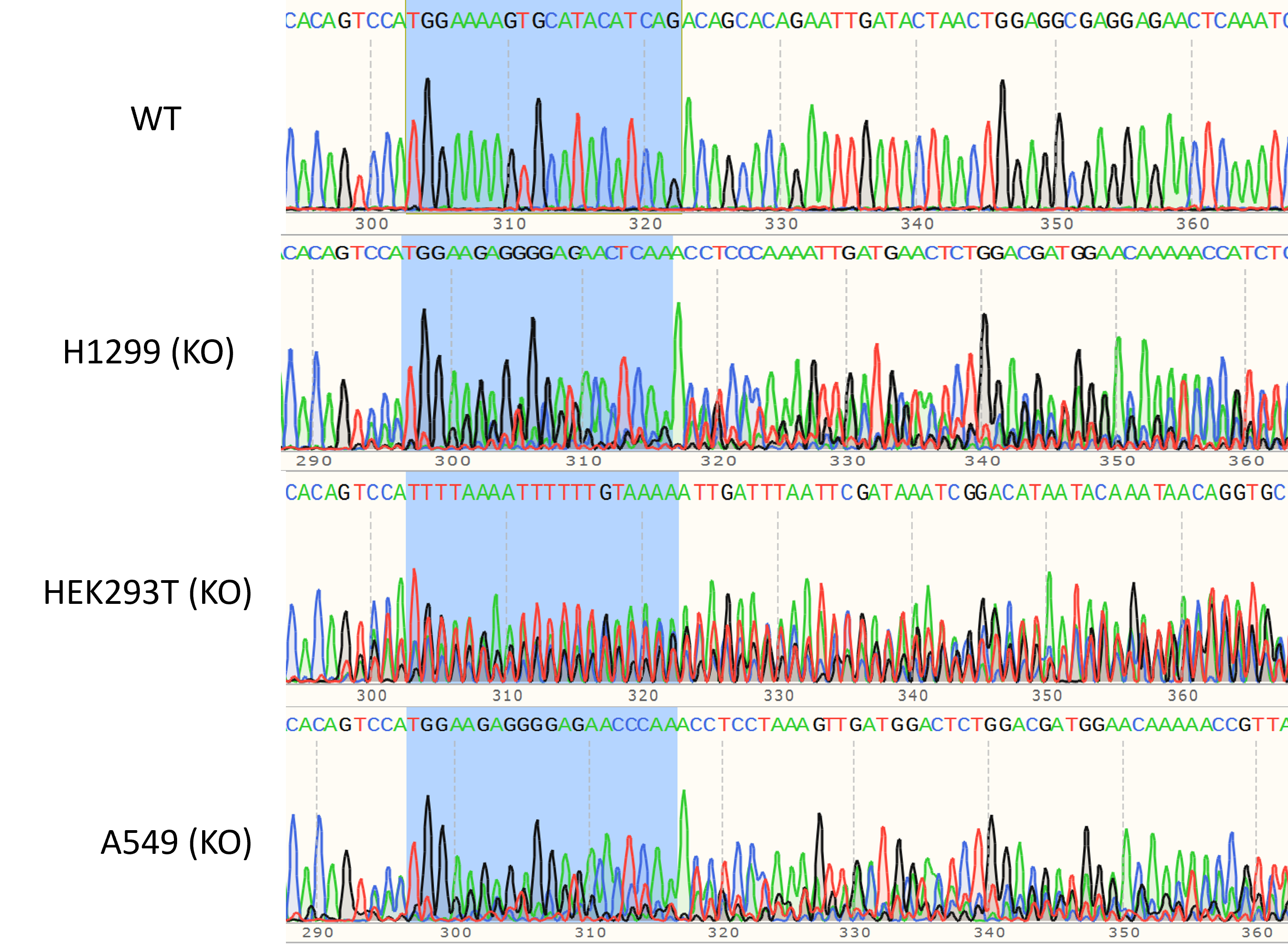
Fig.2 Chemically synthesized sgRNAs were used to generate FBXW7 knockout cell lines.
In a 24-well plate, Cas9-sgRNA complexes were transfected using CRISPR-Fectin™ transfection reagent (Cat# EF015), and cellular gDNA was sequenced 48 hours later.
CRISPR Lentivirus
(more…)Custom sgRNA Lentiviral Particles
sgRNA for human, mouse, and rat packaged in high-titer lentivirus.
| Vector | Promoter | sgRNA and Cas9 | Selection Marker/ Reporter Gene | Vector Type | Vector Map |
|---|---|---|---|---|---|
| pCRISPR-LvSG03 | U6 | sgRNA only | Puromycin / mCherry | Lentiviral |  |
| pCRISPR-LvSG06 | U6 | sgRNA and EF1a-driven Cas9 (wild type) in the same vector | Puromycin | Lentiviral | |
| pCRISPR-LvSG09 | U6 | sgRNA and EF1a-driven Cas9 (wild type) in the same vector | Puromycin / eGFP | Lentiviral | |
| pCRISPR-LvSG10 | U6 | sgRNA and EF1a-driven Cas9 (wild type) in the same vector | Hygromycin | Lentiviral | |