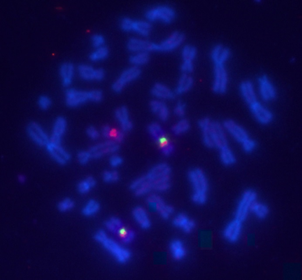
Using FISH with CRISPR
Using VividFISH™ probes for genome editing applications
Immortalized mammalian cell lines, while providing convenient model systems for biomedical and pharmaceutical research, are often aneuploid. For example, the commonly-used human embryonic kidney cell line HEK293 is hypotriploid, with a modal chromosomal number of 64. Further, the ploidy of HEK293 and some other cell lines is not uniform among cells in a population. This deviation of ploidy from the normal diploid state in immortalized cell lines poses a challenge for genome editing applications, such as gene knockout and mutagenesis, which often require complete elimination of wild type gene function. Therefore, knowledge of the number of copies of a targeted gene to be edited could signicantly benefit a cell line-based genome editing project.
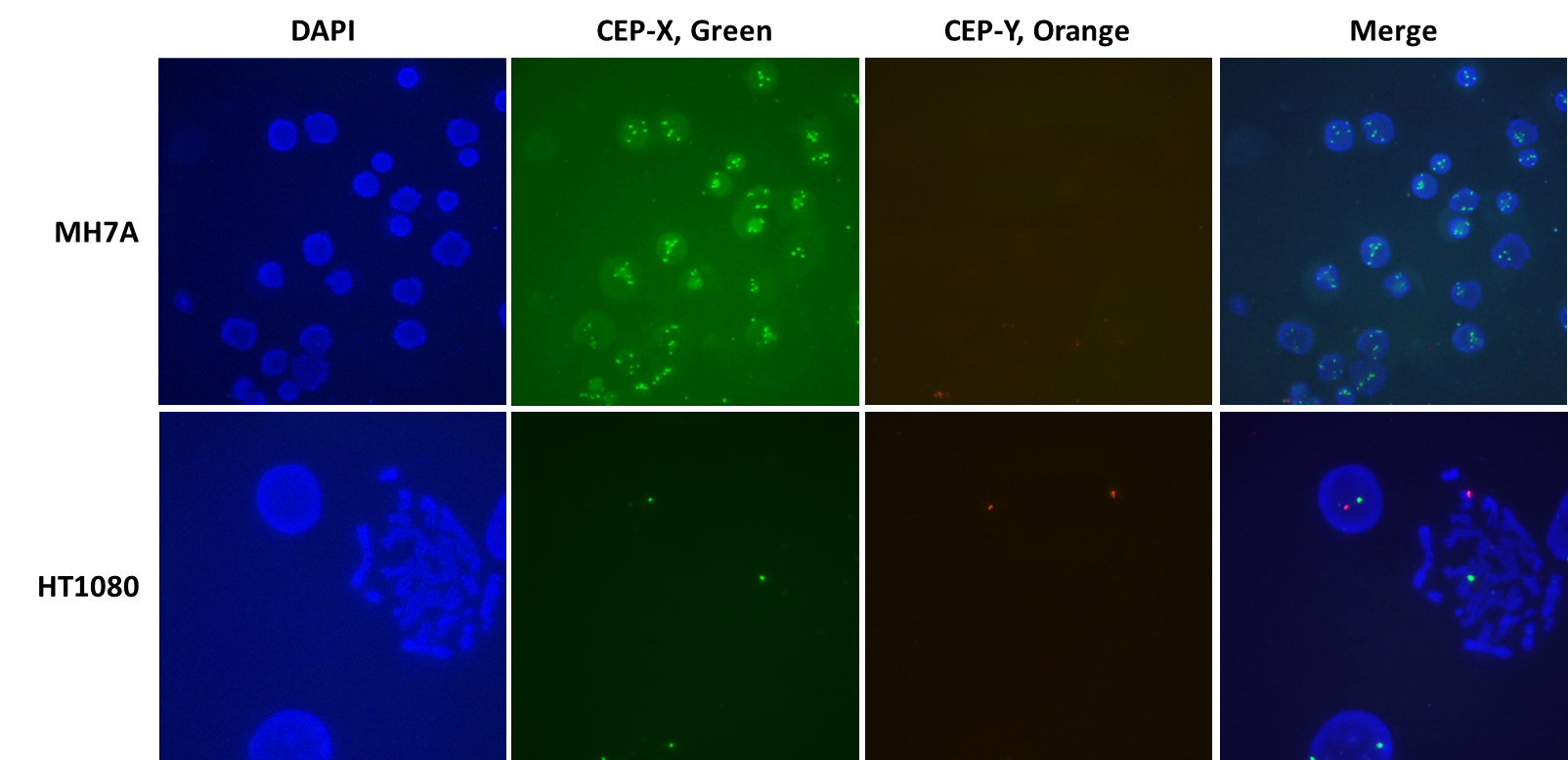
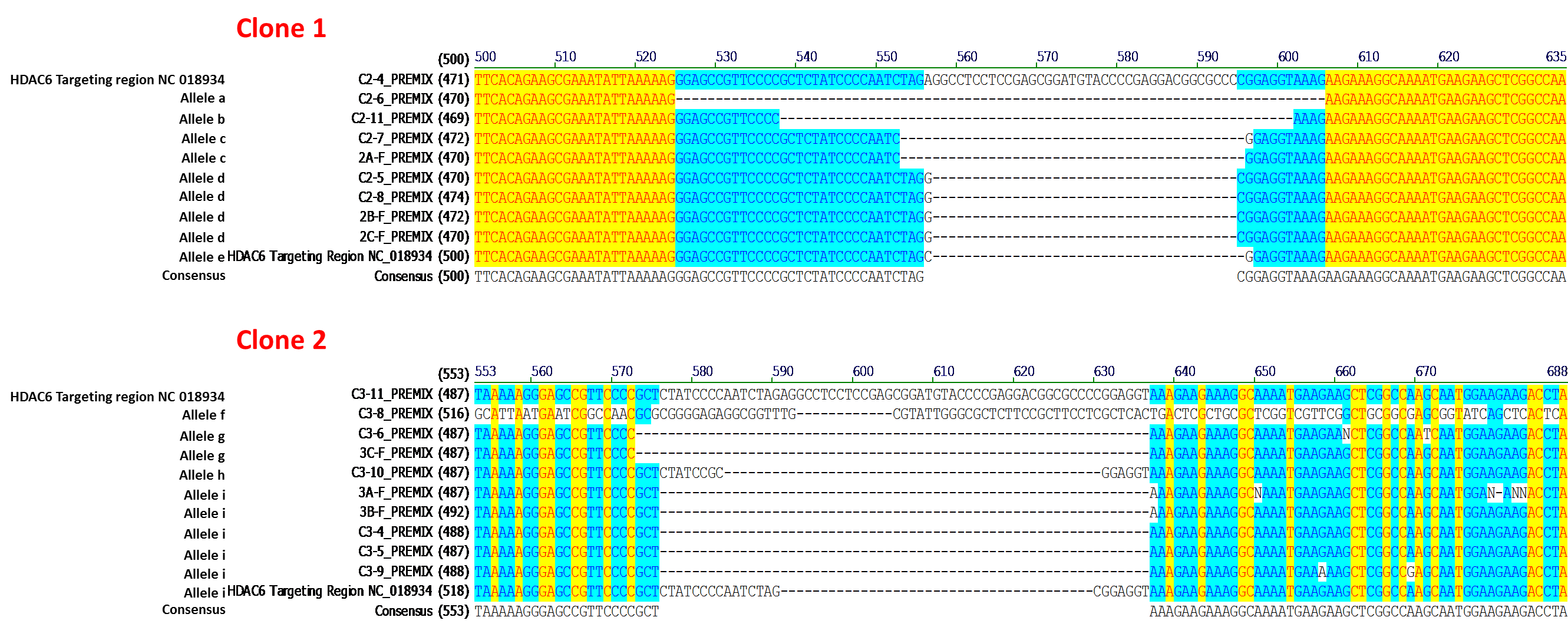
GeneCopoeia’s VividFISH™ chromosome enumeration probes are powerful tools for determining target gene copy number in genome editing applications. Using VividFISH™ probes to determine target chromosome number in a cell line before undergoing a genome editing project can help guide clone screening for desired modifications. To illustrate this concept, GeneCopoeia used a VividFISH™ chromosome enumeration probe to determine chromosome copy number in the human synovial fibroblast cell line MH7A, in which the X chromosome HDAC6 gene was being knocked out using CRISPR. Using VividFISH™, we determined that MH7A cells carry five copies of the X chromosome (Figure 1A). This information helped us identify single clones that contained all five copies of the HDAC6 gene carrying CRISPR-mediated frameshift mutations (Figure1B).
| A |
|
|
 |
|
| B |
|
|
 |
Figure 1. Using VividFISH™ chromosome enumeration probes to identify pentalleleic gene knockout in a mammalian cell line. A. Fluorescence in situ hybridization (FISH) analysis reveals the presence of 5 copies of the HDAC6 gene in MH7A cells. Unmodified MH7A cells (top) and the diploid human cell line HT1080 (bottom) were hybridized with VividFISH™ probes recognizing the X chromosome (green), and the Y chromosome (orange). Only the male cell line HT1080 hybridizes with the Y chromosome probe. Nuclei were stained with DAPI (blue). B. Sequence analysis from two single clones following transfection of MH7A cells with GeneCopoeia GeneHero™ sgRNA-expressing plasmids targeting HDAC6 (NCBI geneID:10013). Each clone carries 5 distinct frame shift alleles generated in a single transfection.