Select Page

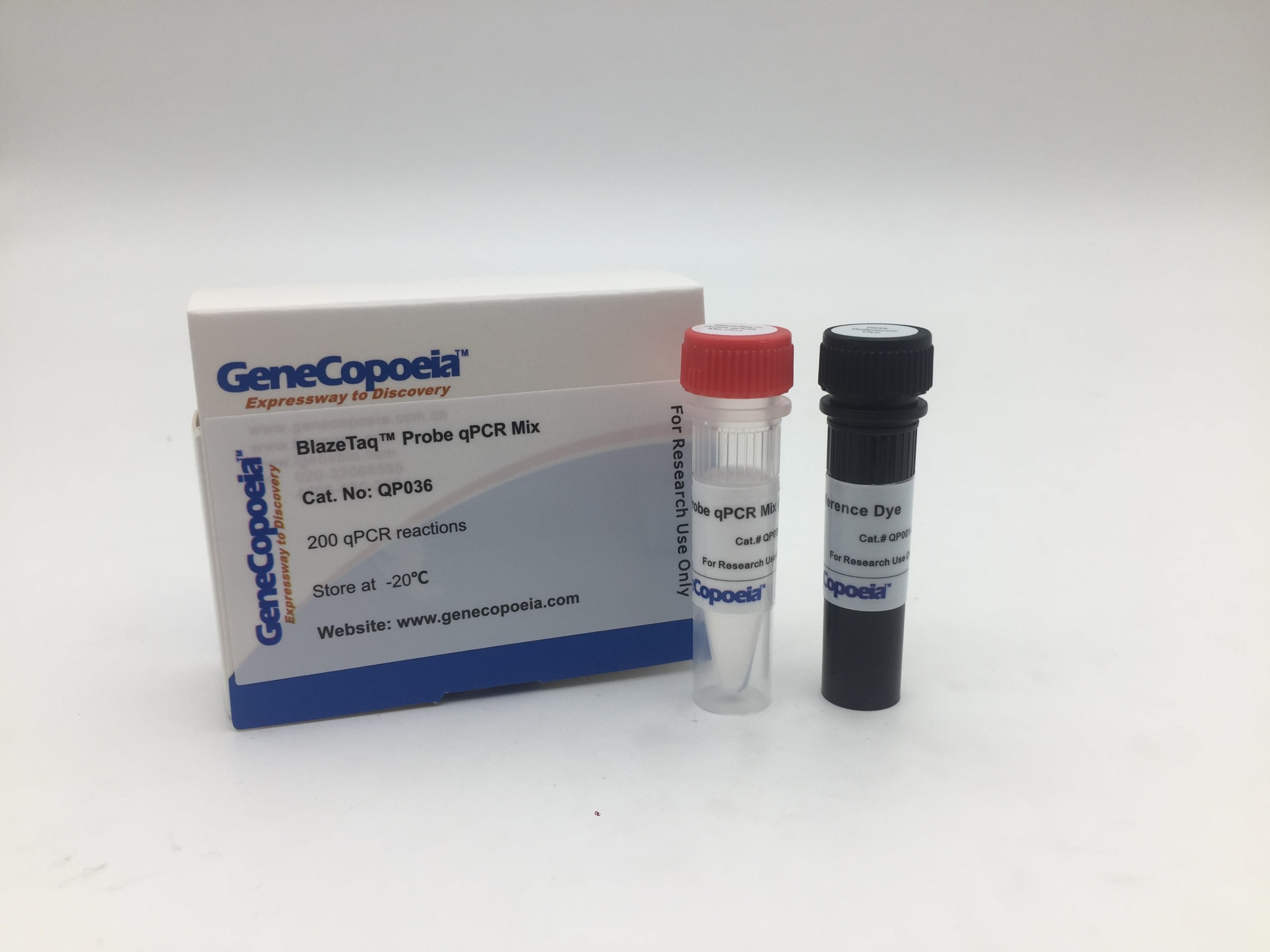
BlazeTaq™ Probe qPCR Mix

BlazeTaq™ Probe qPCR Mix with ROX
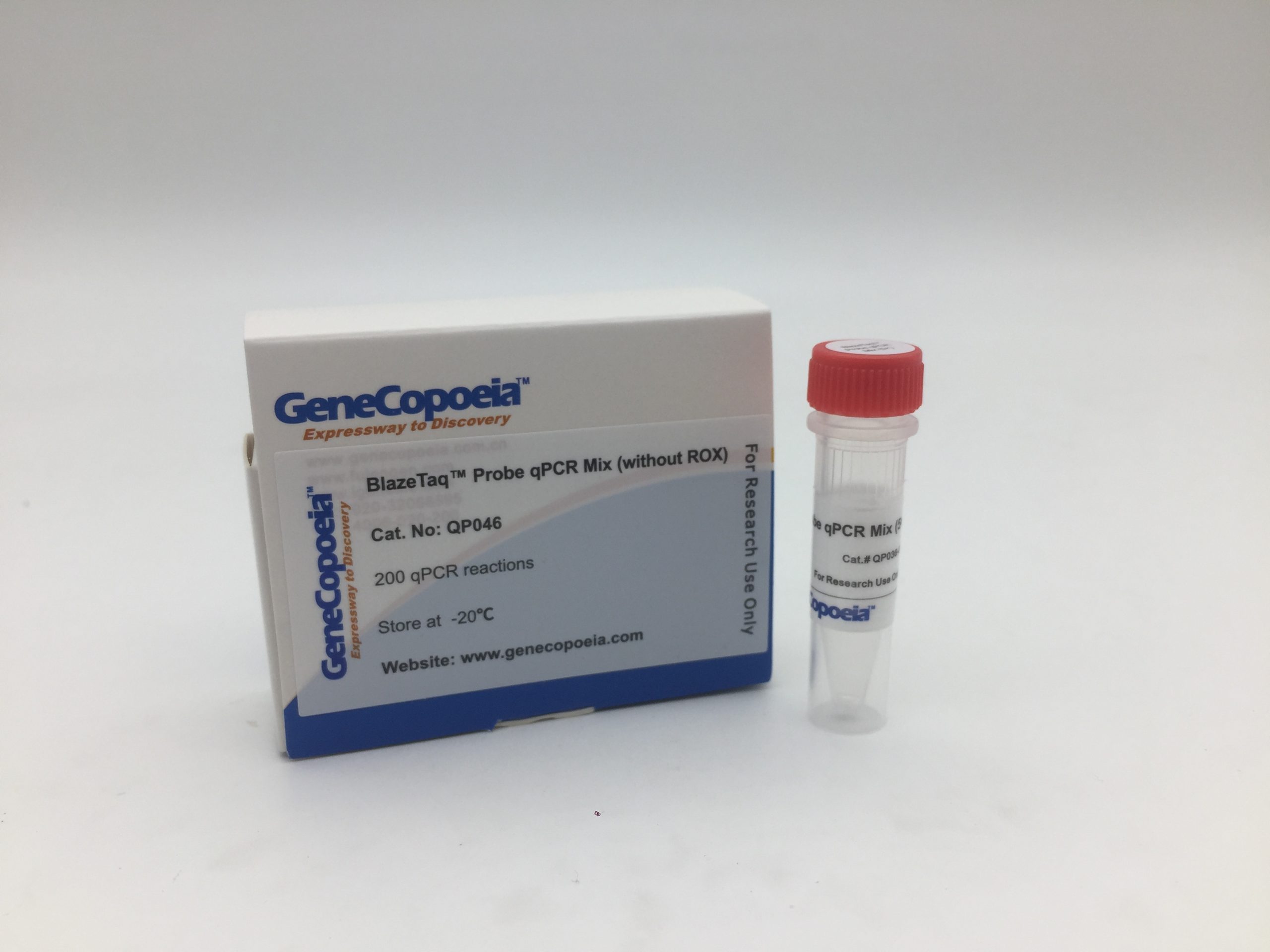
BlazeTaq™ Probe qPCR Mix without ROX

BlazeTaq™ Probe qPCR Mix with ROX BlazeTaq™ Probe qPCR Mix with ROX BlazeTaq™ Probe qPCR Mix with ROX BlazeTaq™ Probe qPCR Mix with ROX BlazeTaq™ Probe qPCR Mix without ROX BlazeTaq™ Probe qPCR Mix without ROX BlazeTaq™ Probe qPCR Mix without ROX BlazeTaq™ Probe qPCR Mix without ROX

Price: $92.00 $179.00 $352.00 $735.00 $92.00 $179.00 $352.00 $735.00
Catalog#:
  • QP035
  • QP036
  • QP037
  • QP039
  • QP045
  • QP046
  • QP047
  • QP049
Size: 100 rxn 200 rxn 600 rxn 1000 rxn 100 rxn 200 rxn 600 rxn 1000 rxn
BlazeTaq™ Probe qPCR Mix – 30% Off*
Ends May 31, 2026
Qty:
Manual: DownloadDownloadDownloadDownloadDownloadDownloadDownloadDownload
View your cart


*Promotions are valid in the US & Canada only. For international customers, please contact your local distributors. Discounts are not valid on previous purchases and cannot be combined with additional discounts.
Product Introduction  

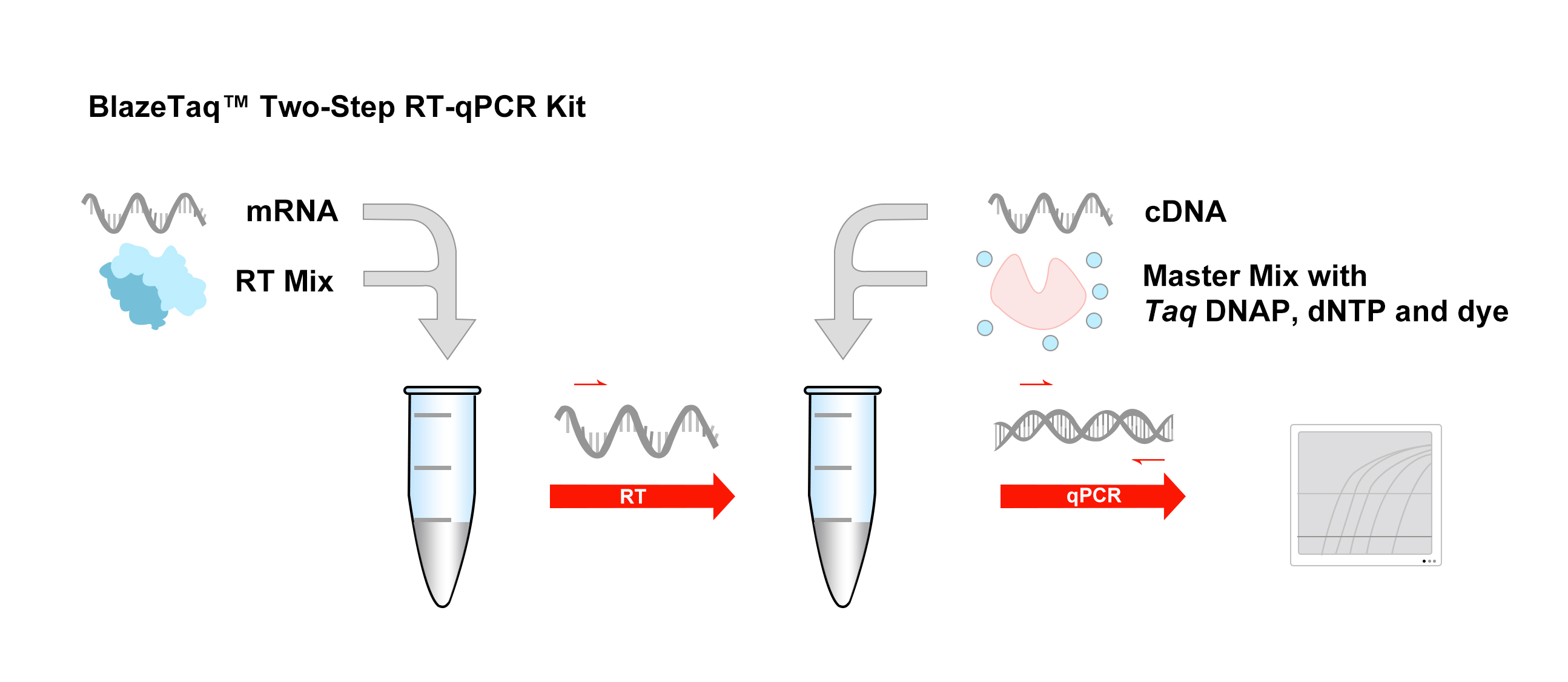
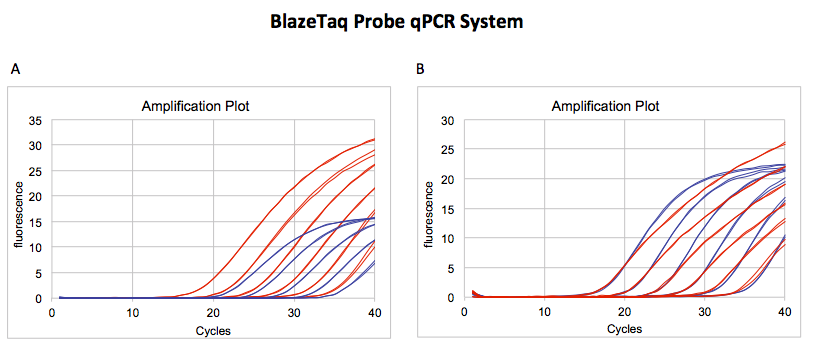
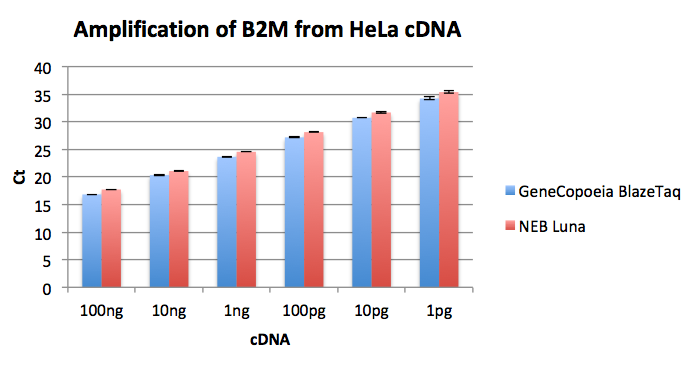
BlazeTaq™ Probe qPCR mix is designed for highly sensitive and accurate quantitative PCR (qPCR) that uses hydrolysis probes and DNA as starting material. The kit is supplied with a ready-to-use 5X master mix with a hot-start Taq DNA polymerase, dNTP and all optimized buffer components. Tests show that the BlazeTaq™ Probe qPCR Mix is compatible with diverse real-time PCR instruments and outperforms competitors’ products on the sensitivity and specificity of cDNA and genomic DNA detection.​

              ​BlazeTaq SYBR Green RT-qPCR Kit


MSI

Introduction

MSI (Microsatellite Instability) is failure to correct the errors that spontaneously occur during DNA replication caused by DNA mismatch repair deficiency (dMMR), resulting in the accumulation of chromosomal mutations at certain repetitive DNA motifs as microsatellites. GeneCopoeia's MSI analysis service uses the PrecisionPlex™ MSI Detection System, which consists of a unique combination of seven mononucleotide microsatellite loci that can potentially lead to more sensitive and specific results compared to competitors’ products.

The PrecisionPlex™ MSI Detection System is a fluorescent multiplex PCR-based assay to detect MSI in human cells. It contains fluorescently labeled primers for seven microsatellite loci (NR-27, NR-21, BAT-26, BAT-25, NR-24, NR-22 and MONO-27) and two tetranucleotide loci (D13S317 and D7S820) and amelogenin (AMEL). The PCR products of the microsatellite loci from matching normal and test samples are compared to detect DNA dMMR.

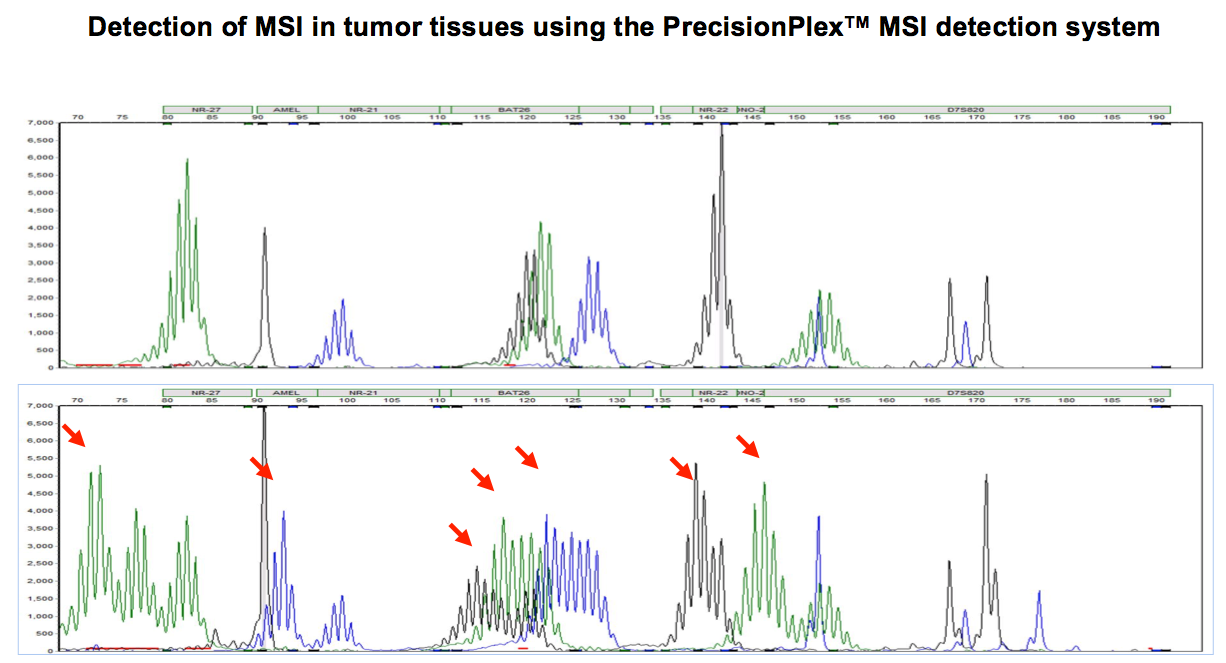
Matching DNA amplification products of samples from normal (top panel) and tumor tissue (bottom panel) were analyzed using the MSI detection system. The presence of new alleles in the tumor sample (indicated by red arrows) that were not present in the normal sample indicates MSI.

Sample Requirements

DNA Samples: Genomic DNA OD260/280 at 1.8~2.0, concentration at 50 ng/µl, ≥20 µl;

Cell Samples: Fresh/frozen/dried cell pellets, tissue (FFPE or fresh) and blood samples. For cell pellets, wash the cells in buffer prior to shipping/freezing/drying the pellet to remove any traces of media or trypsin. Cell number ≥106 cells.

Please contact GeneCopoeia at 1-866-360-9531 or inquiry@genecopoeia.com for a quote.

STR

Short tandem repeat (STR) profiling allows customers to confirm the identity of a cell line and whether it is free of contamination from other cell lines and microbes. It is estimated 15-20% of cell cultures are cross-contaminated or misidentified, leading to lost time, money and retraction of previous publications due to invalid data. NIH recommends that all cell lines are authenticated before publication. Nature mandates STR fingerprinting data for papers reporting new human embryonic stem cell lines.

GeneCopoeia's STR profiling service uses the PrecisionPlex™ 25 STR Multiplex PCR Detection System to simultaneously amplify 25 STR loci. A unique pattern of repeating DNA is generated for each human cell line and verified by comparing to the baseline profile.

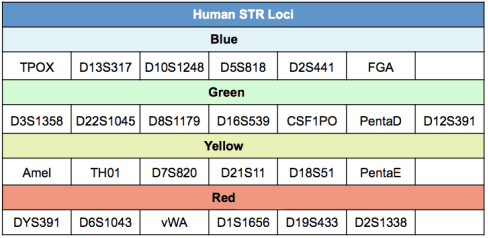
Human STR loci

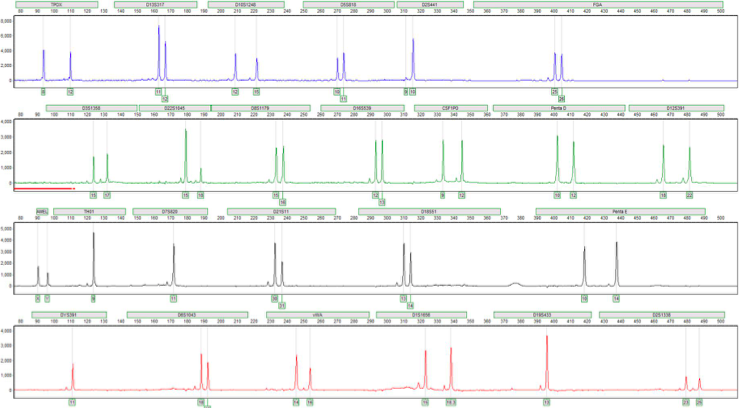
STR DNA profiling Electropherogram

STR DNA profiling based on multiplex PCR provides high resolution typing with 24 autosomal loci and one gender determination marker (Amel) labeled with fluorescent probes.

Sample Requirement

DNA Samples: Genomic DNA OD260/280 at 1.8~2.0, concentration at 50 ng/µl, ≥20 µl;

Cell Samples: Fresh/frozen/dried cell pellets, tissue (FFPE or fresh) and blood samples. For cell pellets, wash the cells in buffer prior to shipping/freezing/drying the pellet to remove any traces of media or trypsin. Cell number ≥106 cells.

Please contact GeneCopoeia at 1-866-360-9531 or inquiry@genecopoeia.com for a quote.


Related Services

Cell Line Characterization & Authentication

Introduction

R&D involving the use of cell lines requires a good understanding of the purity, species of origin, chromosomal and genetic characteristics of the cell lines used. Cultured cell lines in the lab are susceptible to contamination by microbes, mycoplasma and other cells, thereby demanding periodic monitoring for characteristics to authenticate the cell line identity. GeneCopoeia offers cell line characterization reagent kits and services that involve testing for a combination of important genetic markers, including chromosomes, DNA fingerprints, alternative splicing and genes of your interest to analyze genetic variation, exploring transcriptome profiles, and assure culture sterility. 

Please contact GeneCopoeia at 1-301-762-0888 or inquiry@genecopoeia.com for a quote.


Analyze genetic variation

Fluorescence in situ hybridization (FISH)

For chromosome enumeration, as well as detection of disease-related genetic mutations, amplification and rearrangements resulting in large-scale changes in the physical arrangement of genes on chromosomes.

Chromosome enumeration FISH probes can be used to determine chromosome copy number in diagnosis and prognosis of cancers and other diseases.

Disease gene FISH probes can be used to detect oncogene deletion, amplification and rearrangement in cancer cellls.


STR analysis

Cross-contamination among cultured cell lines is a prevalent and persistent problem. Short Tandom Repeat (STR) DNA profiling identifies polymorphisms among STR markers; it is a relatively easy, low cost and reliable method for the detection of cellular cross-contamination to reveal true cell line identity.


MSI analysis

MSI is a failure to correct the errors that spontaneously occur during DNA replication, resulting in the accumulation of chromosomal mutations at certain repetitive DNA motifs as microsatellites. MSI testing is performed to analyze colon and other tumor tissue samples for features suggestive of Lynch syndrome or hereditary non-polyposis colorectal cancer (HNPCC).


Exploring Transcriptome Profiles

RT-qPCR

For the quantification of alternative splicing variants and gene expression profiling. Custom qPCR primers designed for the quantification of mRNA and detection of exon skipping, intron retention, alternative 5' or 3' splicing and other splicing variants to identify and quantify different splicing variants.


Assuring Culture Sterility

Mycoplasma detection

Mycoplasma contamination of cell cultures can easily go undetected and adversely affect cell physiology and metabolism. Therefore, routine testing is recommended to ensure the purity of cultured cells. GeneCopoeia offers Mycoplasma Detection Services as a preliminary testing step prior to all mammalian stable cell line services using our own highly sensitive mycoplasma detection kit.