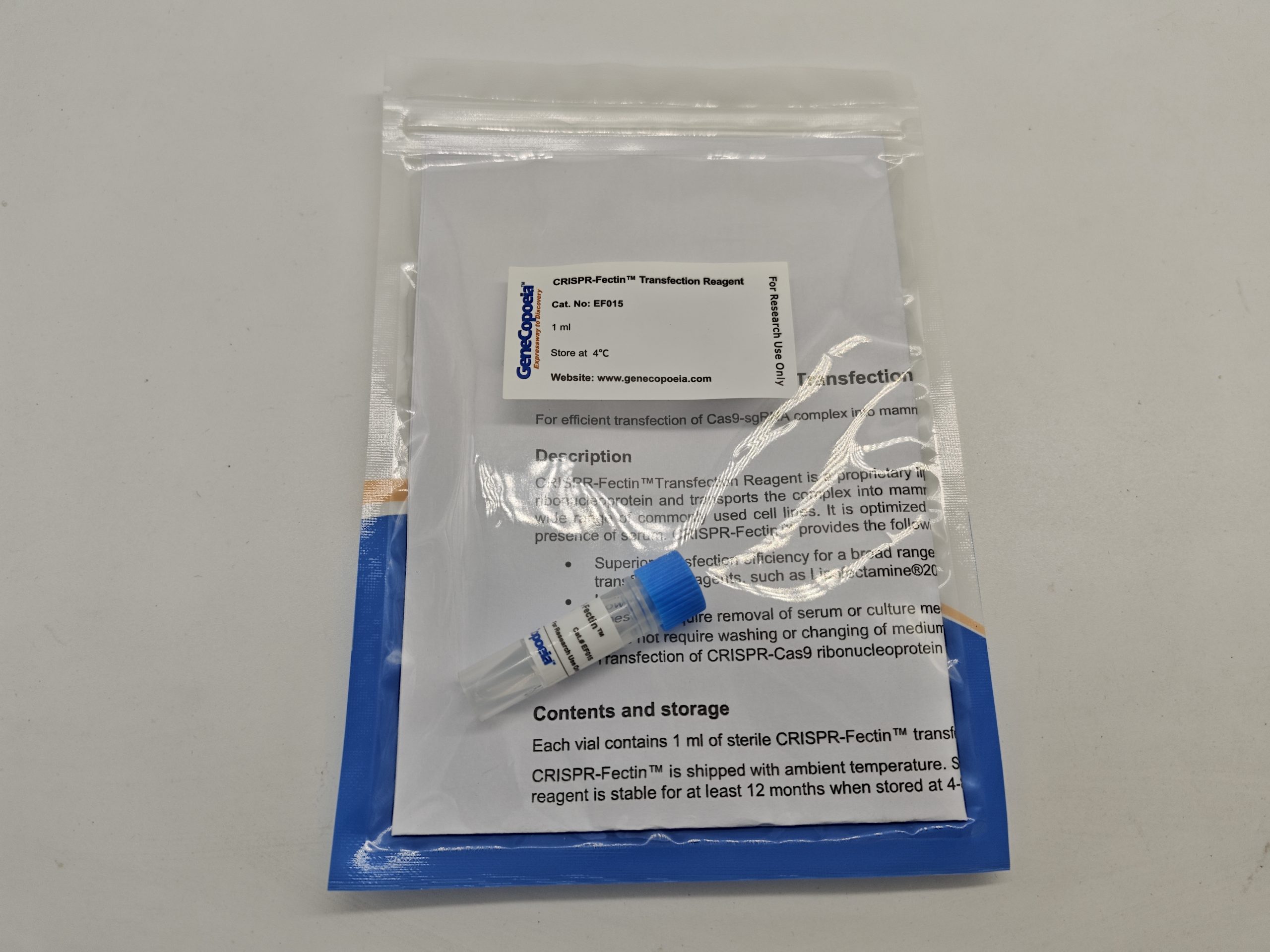
CRISPR-Fectin™ Transfection Reagent
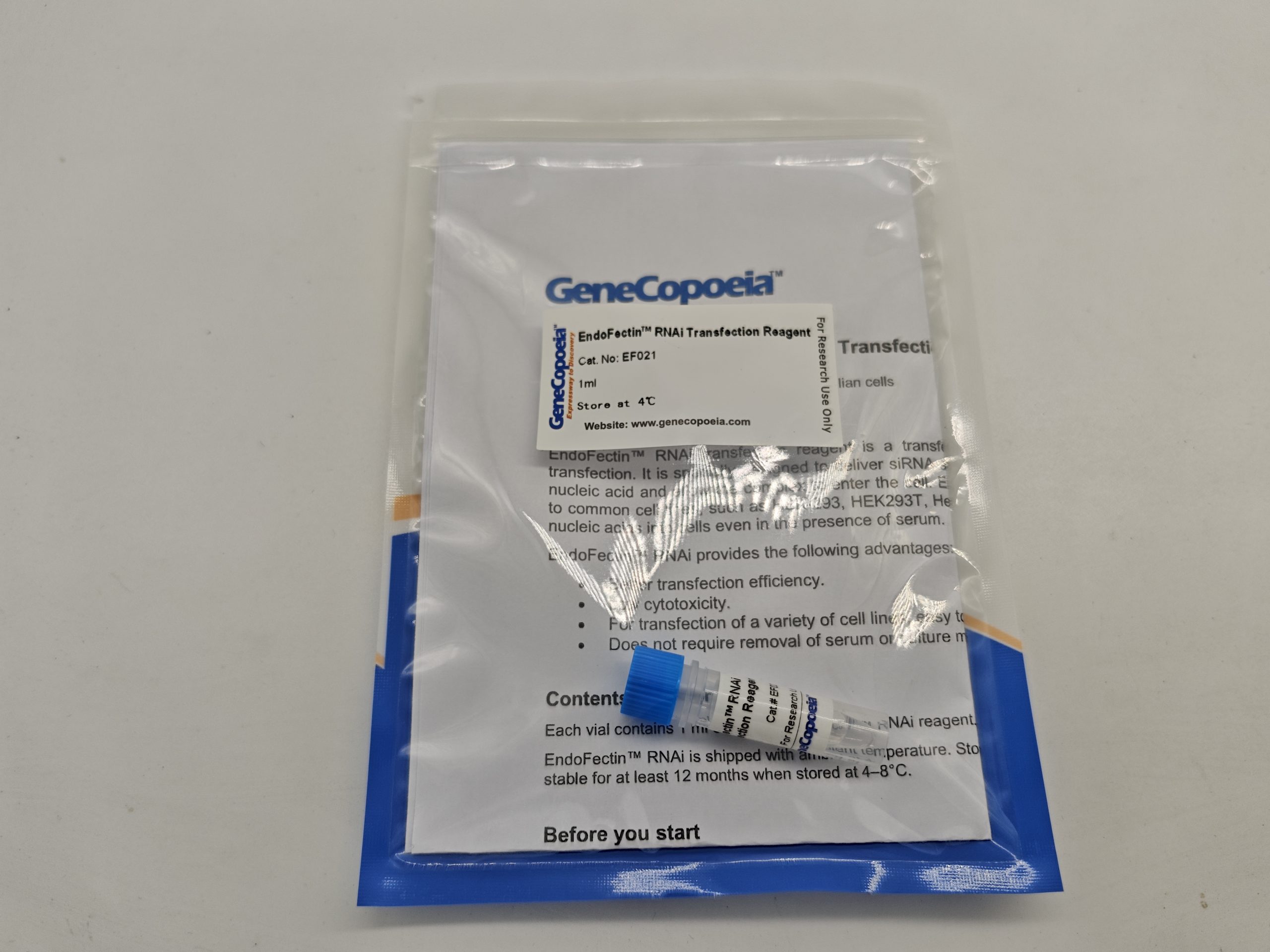
EndoFectin™ RNAi Transfection Reagent
EndoFectin™ RNAi
EndoFectin™ RNAi transfection reagent is a transfection reagent based on the principle of lipofectamine® transfection. It is specially designed to deliver siRNA and miRNA to mammalian cells. It can form a complex with nucleic acid and allow the complex to enter the cell. EndoFectin™ RNAi transfection reagent is widely applicable to common cell lines, such as HEK-293, HEK293T, Hela, NIH/3T3 and A549, etc. This reagent efficiently delivers nucleic acids into cells even in the presence of serum.Advantages
- Better transfection efficiency.
- Low cytotoxicity.
- For transfection of a variety of cell lines, easy to operate.
- Does not require removal of serum or culture medium, or removal of medium after transfection.
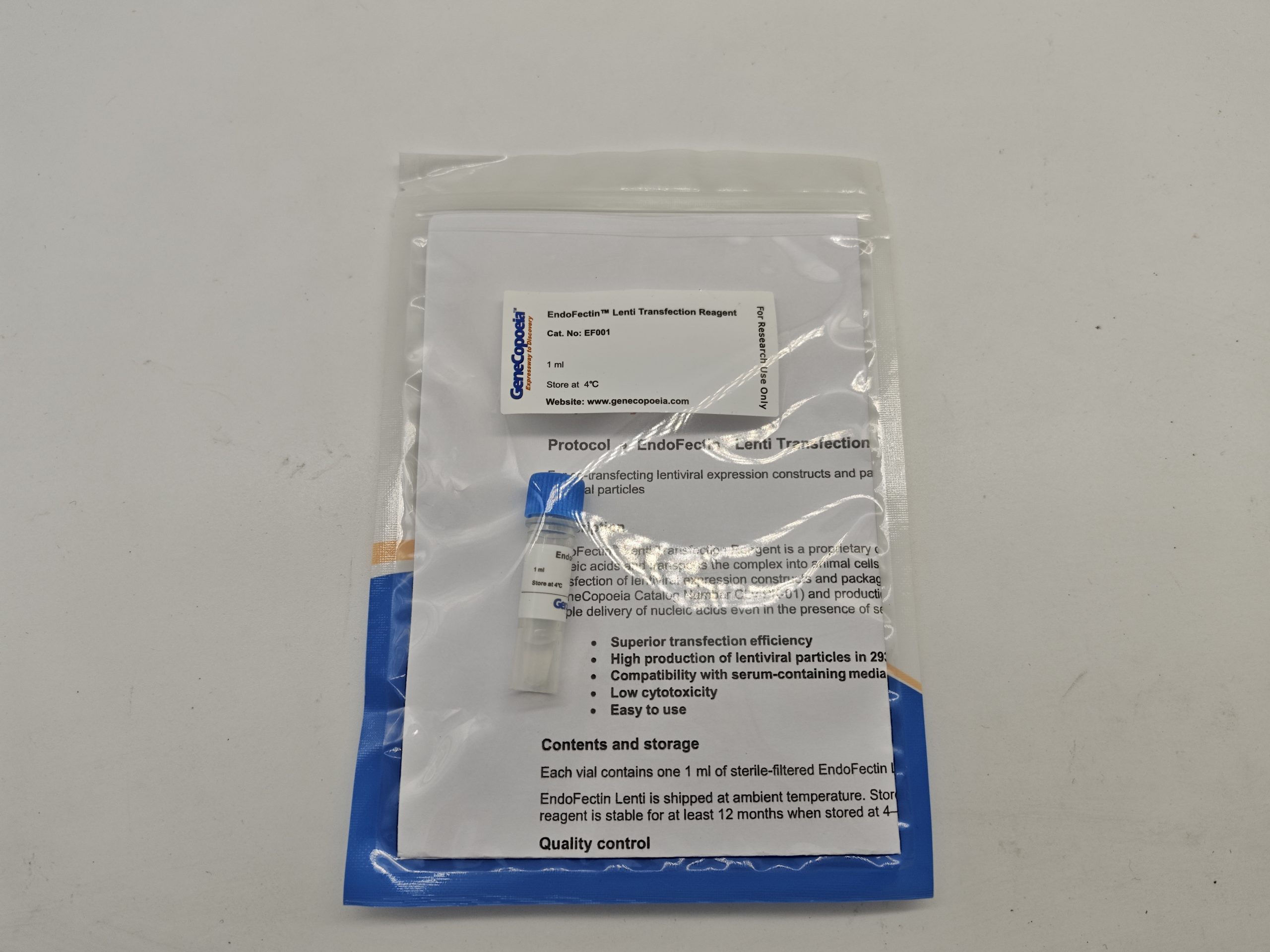
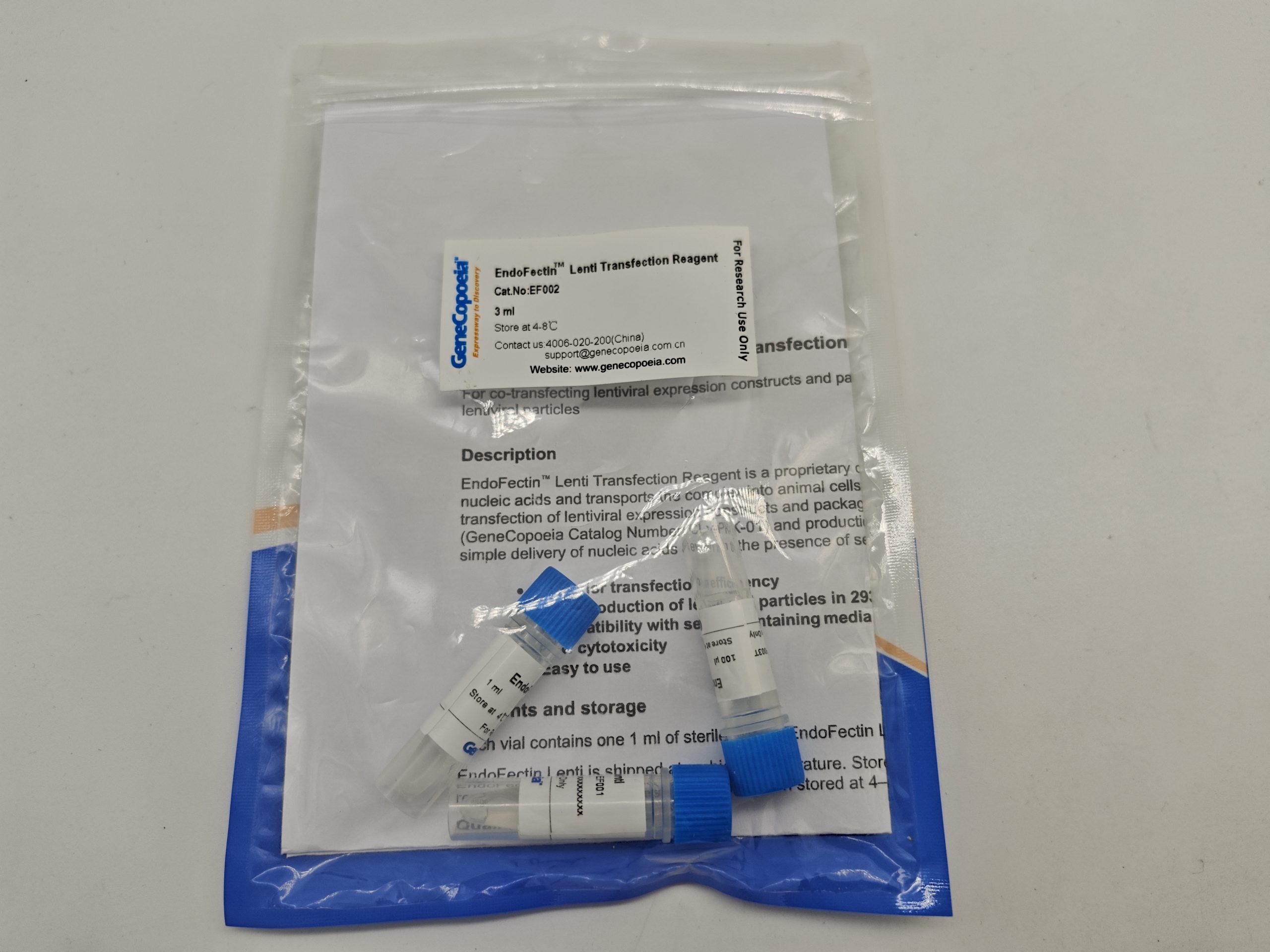
EndoFectin™ Lenti Transfection Reagent
EndoFectin™ Lenti is a robust transfection reagent, optimized specifically for lentiviral packaging. This cation-based transfection reagent delivers high transfection efficiency and high titer lentiviral packaging results, equal to or better than leading competitors (Figure 1).
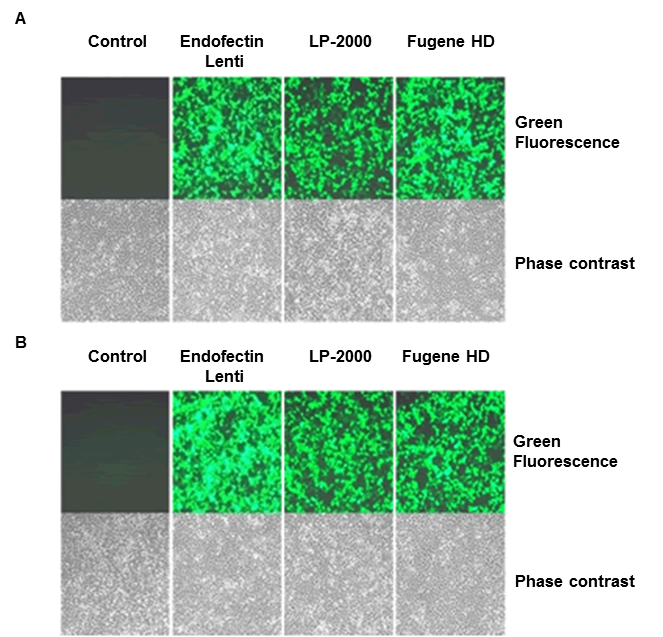
Figure 1. HEK293T cells were transfected with an EGFP-expressing plasmid using various transfection reagents as indicated. The cells were observed with an inverted fluorescence microscope 20 hours after transfection. HEK293T cells were transfected either in serum-free medium (A) or in 10% serum (B). Lipofectamine 2000® (LF2000) is a trademark of Invitrogen; FuGENE® is a trademark of Roche.
EndoFectin™ Max Transfection Reagent
*Promotions are valid in the US & Canada only. For international customers, please contact your local distributors. Discounts are not valid on previous purchases and cannot be combined with additional discounts.
A versatile & efficient suite of robust transfection reagents
GeneCopoeia’s EndoFectin™ line of transfection reagents provide affordable and powerful solutions that encompass a range of different applications, general purpose reagents like EndoFectin™ Max. See below to learn more about.EndoFectin™ Max Transfection Reagent
EndoFectin™ Max is a lipid-based transfection reagent. This versatile transfection reagent has been tested and optimized for highly efficient transfection of a large collection of commonly used cell lines as well as many difficult-to-transfect cell lines.Advantages
- Equal transfection efficiency for several cell lines compared with Lipofectamine® 3000 in plasmid transfection (Figure 1).
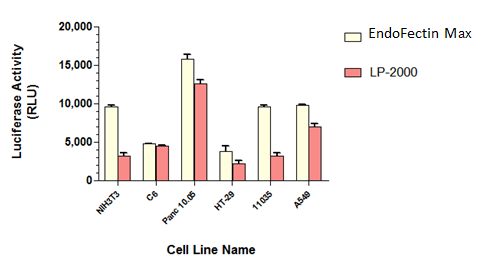
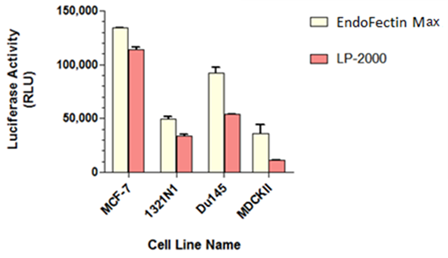
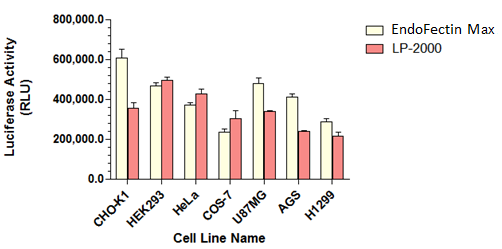
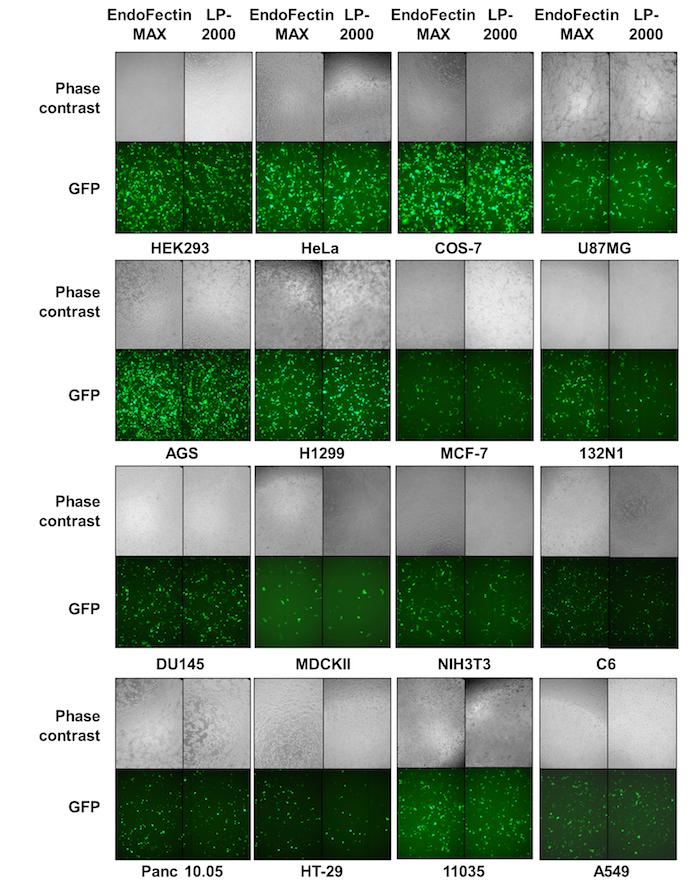
- Superior transfection efficiency for a broad range of cell lines compared with Lipofectamine® 2000 (Figures 2 and 3).
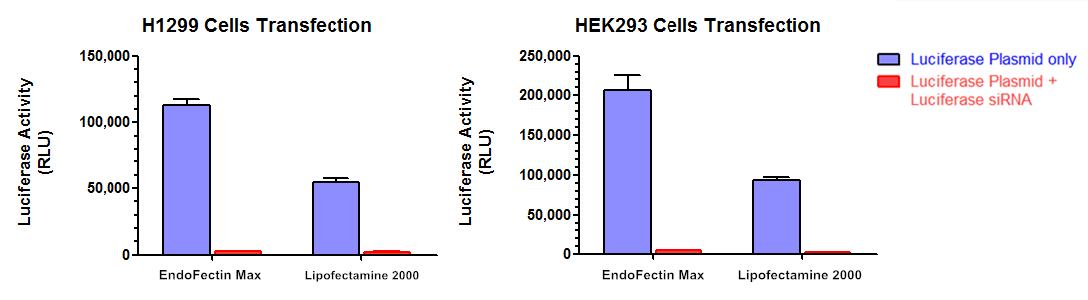
- Equal to or greater transfection efficiency compared with Lipofectamine® 2000 in siRNA transfection (Figure 4).
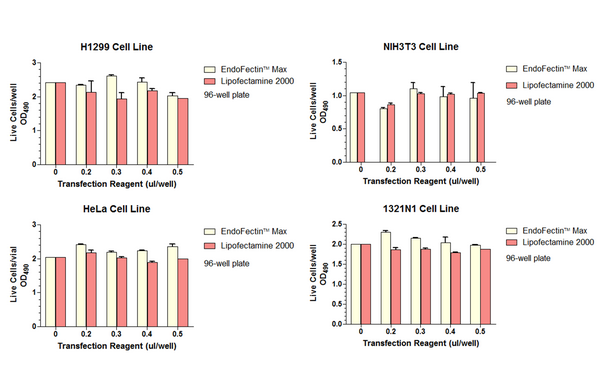
- Low cytotoxicity (Figure 5).
- Does not require removal of serum or culture medium, or removal of medium after transfection.
- For overexpression, knockdown, knockout, as well as high-throughput applications
Experiment 1: Comparison of EndoFectin™ Max and Lipofectamine® 3000 in plasmid transfection
| A | B | ||
| C | D | ||
| E | F | ||
|
Figure 1. Transfection of 6 commonly-used cell lines using either EndoFectin™ Max, Lipofectamine® 2000 (LP2000) or Lipofectamine® 3000 (LP3000). Cell lines were transfected with a firefly luciferase-expressing plasmid. Transfection efficiencies were assessed by luciferase activity (RLU). Note: for HEK293 (A), HeLa (C), A549 (D), H1299 (E), and 1321N1 (F), 0.15 uL/well of Lipofectamine® 3000 was used rather than 0.2 uL/well. Lipofectamine® is a trademark of Invitrogen. |
|||
Experiment 2: Comparison of EndoFectin™ Max and Lipofectamine® 2000 in plasmid transfection
| A | ![]() |
| B | ![]() |
| C | ![]() |
| Figure 2. Transfection of 17 commonly-used cell lines using either EndoFectin™ Max or Lipofectamine® 2000 (LP-2000). Cell lines with low transfection efficiency (A), medium transfection efficiency (B), and high transfection efficiency (C) were transfected with a firefly luciferase-expressing plasmid. Transfection efficiencies were assessed by luciferase activity (RLU). Lipofectamine® is a trademark of Invitrogen. | |
![]() |
| Figure 3. Assessment of EndoFectin™ Max transfection efficiencies using GFP visualization. 16 commonly-used cell lines were transfected with a GFP-expressing plasmid using either EndoFectin™ Max or Lipofectamine® 2000 (LP-2000). Cells were visualized 48 hours post-transfection under phase contrast or fluorescence microscopy (GFP filter). Lipofectamine® is a trademark of Invitrogen. |
Experiment 3: Comparison of EndoFectin™ Max and Lipofectamine® 2000 in siRNA transfection
| A | B |
Figure 4. Comparison of transfection of siRNA between EndoFectin™ Max and Lipofectamine® 2000, Cell lines H1299 (A) and HEK293 (B) were transfected with either a firefly luciferase-expressing plasmid (blue bars), or co-tranfected with a firefly luciferase-expressing plasmid and an anti-luciferase siRNA (red bars). Transfection efficiencies were assessed by luciferase activity (RLU). Lipofectamine® is a trademark of Invitrogen.
Experiment 4: Comparison of EndoFectin™ Max and Lipofectamine® 2000 for cytotoxicity
![]() |
| Figure 5. Comparison of cytotoxicity between EndoFectin™ Max and Lipofectamine® 2000. Lipofectamine® is a trademark of Invitrogen. |